Presidential Message by Richard McCarthy
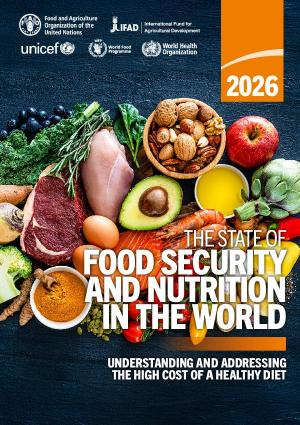
In the new UN Food Security Report (citing data from 2025), there are hopeful signs of progress towards this goal to end hunger. Consider the number 7.8%. That is the global hunger number for 2025 (down from 8.1% in 2024). The report also suggests that this progress may be slowing down due to ongoing structural inequities: high inflation, depressed wages, and the global polycrises that disrupt supply chains, lives, and livelihoods.
As a Rome-based organisation, we do our best to keep one eye on the bird’s eye view of the globe and the other on the ground, achieving ambitious yet practical steps toward healthy local food systems. Half-way through the decade, the new report provides a conflicted picture of our present times. So, we read the 2026 State of Food Security and Nutrition in the World report with caution.
The top number is concerning. 2.69 billion people cannot afford to eat well. This number reflects the structural violence and insecurity of persistent hunger. As to the why and where are these hungry people, consider that for the first time, the largest number of hungry people are no longer in Asia (a part of the world that continues to outperform everyone else financially). The report suggests improvements in Asian food security are due to increased agricultural productivity (i.e., the industrialisation of food), and targeted social protection programmes. Meanwhile, Africa now, for the first time, plays host to the largest population of hungry people in actual numbers, not just as a proportion of its population. This means that 309 million Africans live hungry, surpassing Asia’s 292 million people.
While it may seem obvious to suggest this Asian “success” is due to economic strategies that promote urbanisation and industrialisation (in many sectors, including food). However, not so fast! Should African agricultural policies simply rush to replicate the Green Revolution that transformed Asian agriculture, consider the risks to food security and food sovereignty. The chemical inputs that made the Green Revolution possible in Asia are tied to complex and expensive imports that may bring greater dependency than would the development of local agroecology. Consider spiralling hidden costs, some of which are hiding aboard ships that await passage through the Strait of Hormuz.
I believe that stories in this and other recent editions of our newsletter point to the kinds of strategies we deem valuable to address food security in Africa and beyond. We have already witnessed the frustrations farmers articulate in our AREA Africa projects in the Republic of Congo, Ghana, and Senegal for access to local markets, where they have some power to set prices. Or consider work we will soon be launching in the Andean region of Latin America, where family agriculture seeks solidarity with urban populations who feel cut off from traditional food ingredients.
Change is in the air. Consider some of the key insights from the UN report and how it helps us to tell our story. What is our story? Farmers markets are agents of change. We recognise that change is difficult. We are here to mitigate changes. We ask farmers to join forces with their competitors (other farmers) to sell their goods in an organised and recurring public space (curated by a neutral body). Farmers changes include holding onto products longer than what they otherwise would find comfortable. We ask them to listen to consumers; revive crops and breeds that the big marketplace long ago deemed unpopular; and to alter the rhythm of operations to planting, harvesting, and selling simultaneously. These risks can yield great rewards, like improved cash flow, and control over setting prices. However, they represent scary changes.
Meanwhile, we ask consumers to alter their purchasing habits by integrating weekly markets into their already busy lives; and turning attention away from processed foods and towards fresh ingredients (some of which may no longer be familiar). Our role with consumers, as with farmers, is to prepare them for the changes. Preparation does not come easily, but it comes with the design and maintenance of safe, engaging, and light public spaces. But wait, there is more. We also recognise that we — with our limited resources — also provide the technical support to both consumers and producers with the additional support to navigate these changes.
Why are these changes necessary? The UN report makes the case that what is currently the norm just is not working for so many on our planet.
Purchasing power is not an agricultural problem. It is an economic one. The big story here is that good food (fresh fruits and vegetables) are simply too expensive for most people on the planet to afford. If so, what is the solution? Either we reduce these food costs, or increase the wages. In a way, there is a third solution: To subsidise the good food by launching social protection programmes that mitigate the risk for consumers to purchase and for farmers to harvest. The problem is that most of the existing public subsidy programmes protect the wrong products: starchy carbohydrates, like rice, cassava, and wheat. These are important staples, but they also do little to sustain human health in accordance with the SDGs.
By prioritising carbohydrates, programmes satisfy immediate needs, at the risk of delivering sustained human health. Here is where the “real food” that our beloved instrument — the farmers market — delivers: fruits, vegetables, and proteins, like eggs, fish and meat.
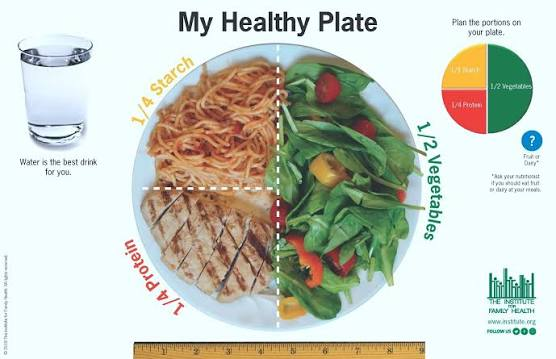
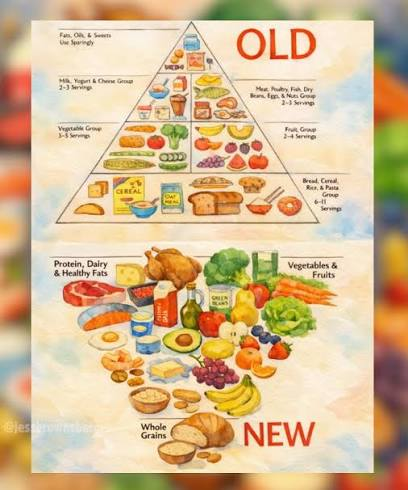
In recent years, public health authorities have begun to shift their thinking about fresh fruits and vegetables versus carbohydrates, by trading the food pyramid for other visual instruments, like the ideal plate of consumption (with fruits and vegetables as stars, and protein and carbohydrates as supporting cast members). In order for this shift to have actual teeth, it will require changes in government subsidy programmes (both at the supply and demand side of the equation). This means that rather than subsidizing and spreading the capital and chemical intensive model of growing monocrop rice, wheat, etc., subsidies should be directed towards the very foods that farmers markets trade on: especially fruits and vegetables.
I encourage you to review and read the report. I read it as an invitation for our community of practice to improve the way we describe our work — as agents of change. Help us to make the case that it is strategic to invest in our ability to convene supply with demand, not as advisories, but as partners to restore healthy families, healthy communities, and healthy food economies. While the introduction of nutrition incentive programmes may represent a strategy that mitigates the risks vulnerable consumers encounter to afford the expensive good food, it is the farmers market itself that prepares and normalises good food as something to celebrate in the commons. This is where the relationships we cultivate matter: with farmers and consumers. It is also where the success to manage public spaces as fun and engaging places to learn is not automatic. It takes skill, commitment, and a stated purpose to recognise the dignity for all stakeholders to see their interests articulated beneath the tents and umbrellas of farmers markets around the world.
The State of Food Security and Nutrition in the World 2026 report. Click here to read the report.