Article by Richard McCarthy
Italians cherish October in Rome. They even have a special name for it: Ottobrata Romana. It is a special time of the year in the “eternal city”: Autumnal light, perfect weather, and as we experienced this year, like no other — a string of important events that may help to solidify farmers markets as a compelling strategy for leadership in local food.
When I was elected to serve as President by the members of the newly formed World Farmers Markets Coalition (or WorldFMC) in 2023, I accepted this challenge fully aware that the captains of the industrial food system hardly recognize the local as relevant, if they see it at all. What I have observed since is that the industrial food system’s confidence has been shaken by the rapid and unpredictable changes in the world. Born in the darkness of the COVID-19 pandemic when farmers market organizers around the world began a digital committee of correspondences, we have entered into the light. While the shadow of the long-supply chain industrial grid may still prevent us from being seen by all, things are changing.
Tanti Auguri, FAO! FAO at 80. We entered into Letters of Agreements with the Food and Agriculture Organization of the United Nations to a) evaluate the landscape of farmers markets in different corners of the map, and b) evaluate the organizational capacities of farmers market organizations. Together, we are seeking creative ways to equip farmers markets with the tools to reshape local food economies in places with emerging farmers market movements: Ghana, Congo, Tanzania, Peru, etc. For this reason, we were delighted to stage our General Assembly at FAO on the eve of its 80th birthday bash in Rome. For those unfamiliar with the entrance foyer to the magnificent International Style facility that is FAO, what awaits the visitor is an impressive reminder of the idealism and hope that accompanied its founding at the close of World War II. Carved in stone is the Preamble to the FAO Constitution. I always glance at it during each visit, even if only with a passing glance. To this day, it remains a remarkable expression of human solidarity, especially if you consider two of its tenets: “For bettering the condition of rural populations; and raising levels of nutrition and standards of living.” However, consider the track record of the last 80 years: neo-colonialism, the Green Revolution, persistent poverty and malnutrition, and optimism fades. The worldwide industrialization of food — with use of synthetic materials previously devised for warfare — has accelerated many unforeseen externalities. While reasons for these may be complex, the rationale is written clearly in the Preamble: The other half of the statement on rural livelihoods is that such actions contribute “toward an expanding world economy.” Growth. Of course, growth. This is the goal of every government on the planet, regardless of short- versus long-term costs. Or, consider the clarity in FAO’s devotion to “securing improvements in the efficiency of the production and distribution of all food and agricultural products.” As farmers markets advocates, we are all too familiar with what this logic intends: A quest for scale, efficiency, and simplicity. No wonder we are in the pickle we are in. The challenges of this era are hard-wired into the logic of FAO itself. While I mention this not to point fingers, after all, the commitment to multilateral development and the transfer of knowledge remains paramount. However, keeping this Preamble in mind is helpful to understand why internal contradictions at FAO make it difficult to achieve all desirable outcomes. Biodiversity loss, combined with the weaknesses in local food sovereignty may be a result of intervention, not despite it. For this reason, it is important to recognize FAO’s courage for self-reflection and what I perceive to be a genuine desire to rethink its positions on local food systems, subnational food governance, and a blind devotion to technological innovation in its self-professed pursuit of food systems transformation. Change is hard. It is slow and nonlinear, but cracks in the edifice of perpetual growth, speed, and scale are showing. For this reason, we are grateful to FAO for inviting us to kick-off their celebratory week, to engage with important leaders at all levels of the organization, and to bring the delicious yet quiet revolution of farmers markets to FAO.
The culture of Rome-based entities, and the growing credibility of farmers markets. I still count myself a newcomer and a novice to the ways of Roman diplomacy. I still marvel at the short fuse, fast actions, and manic manner in which programming comes together in this remarkable city. The flow of people and ideas that move from IILA to FAO, from IFAD to the WFP, from the Italian Government to players in the private sector and back can keep an observer dizzy. To say it is a crazy place for diplomacy and public policy may sound dismissive or clichéd. This is not my intention. Rather, it is important to remember that this place operates at the speed of conversations between many stakeholders. Passions erupt just as quickly as the streets are filled with policy escorts that shepherd diplomats and high-ranking officials from one institution to another with the echoing sound of that distinctive siren. The sound is so prevalent that I am not certain locals even hear it anymore. It is within this context that we invited almost 150 local food leaders, farmers, and farmers market managers to attend our third General Assembly. To make matters worse, consider the fact that the overwhelming majority require visas in a complex world whereby citizens of the planet’s majority (the Global South) have to work twice as hard to get to Rome as those of us in the Global North. Add to it, our sector consists of marvelously creative, disciplined, and hardworking social entrepreneurs whose place in the food system is not guaranteed. Most operate small and fragile organizations with modest budgets and in regulatory environments that are challenging (if not hostile). So, the invitation to Rome is both curious and daunting. Few can afford to be away from their organizations over a weekend, since their presence at their markets may still be necessary for smooth running of operations. Herein lies the gamble. Most of our members crave the proximity of a General Assembly, in order to spend time with peers, learn from each other, and get a moment to clear their heads in order to dream big. Meanwhile, our organizational goal is to facilitate these objectives, whilst also placing our local heroes in front of influential decision makers inside organizations like FAO, IFAD, etc. as knowledgeable peers who possess the insights that can help shape the direction of pivotal global institutions towards local food health. Is this attempt at multitasking at the international stage difficult? Yes.
The trials and tribulations of assembling in this day and age. Thank you to the nearly 150 food leaders for dropping everything in their local lives to join us in Rome. From the surprises in scrambling to find adequate housing during Rome’s Jubilee Year to the late-hour booking of flights managed by three different entities, we did it. Was it always pretty? No. Were there enough hours in the day for the warm embrace of informal gathering? Again, no. If anything, our few days together felt like an intense, jet-lagged campaign to squeeze as much out of our field as possible in order to demonstrate the paradox. Though our farmers markets may look like modest interventions, we are cultivating leadership that knows the hidden pathways to pluralism, regionalism like no other field. This being our third General Assembly, I think back to the first two. We were required to give ample time to those who support our enterprise to explain to us why we are present. We talked, but mostly, we listened. This year, with discussions taking place on the big stage at the FAO festival and inside the FAO headquarters, our leaders joined the rostrum with those very leaders we patiently listened to during General Assembly one and two. Something switched this year. With our track record to share findings, know-how, and to cultivate new markets in challenging places, it was our members who joined the expert voices as experts themselves. For this reason, we commend our members who gave it their all to contribute to the causes of biodiversity, public procurement, territorial governance, and the emerging recognition that farmers markets can be instruments to cultivate women and young leaders from town to country.
Proximity matters: Italy’s multifunctional agricultural paradigm can no longer be ignored. In the lead up to our October 2025 General Assembly, we asked our members to complete a lengthy survey to glean proficiencies, challenges, and opportunities. With a stunning response rate of 87%, we shared just a glimpse of these findings during the General Assembly together with reports from the geographic constituencies and high-level reflections from FAO’s Adriano Campolina. Over the next few months, we will share the full findings. In short, they are telling. We know our work. We are not operating blindly. We possess an impressive handle upon the financial affairs of our various operations, and yet we almost universally recognize that our financial positions are weak. Almost by design, we provide an affordable entry point for farmers that keeps most farmers market organizations financially weak. As a result, we work hard, almost to a fault. Many of us are “this” close to burnout. Many express frustration about the delta between our great public value versus the public perception. The reveal should not be perceived as a weakness, so much as a great strength in self-evaluation. Here is the important insight. If our organizational goals were simply to provide that initial point of distribution to farmers to gain direct contact with consumers, then there may be reason for despondency. However, when we collected the mission statements from our members, we were struck by how diverse the ideas may be expressed and yet how similar and ambitious the goal. More than just seeing our organizations as points of sale, nearly all of us understand our organizations to be pivotal change agents. In other words, the farmers market is not the end, but the starting point. This contrasts sharply with how we are perceived by the wider field of food systems (as I described earlier). This is important because when we assemble, we can compare notes. We can identify the ultimate objective or objectives, and frame them in ways that make us stronger, better together. I say this because I see the vision present in all of your mission statements. I am grateful to our host in Rome (Campagna Amica), because they have created the political project to codify the larger goal: to reformulate agriculture as the activity that keeps families thriving on the land, keeping it productive from generation to generation. This makes sense in the Italian context. This project for diversification, or as they describe as multifunctionality. Is this political project universal? Is it complete? This is up for debate. After all, this is the voice of a farmers union, not the voice of a consumers union. Maybe, it is the collective wisdom that can help expand upon Italy’s multifunctional agriculture to mean something relevant to others, or conversely to complete the Italian narrative to incorporate the voices of consumers on behalf of their own dreams, as well as to articulate and empathize with the rural communities who descend upon city centers in Italy every weekend to achieve the “campagna amica” / friendship with the countryside.
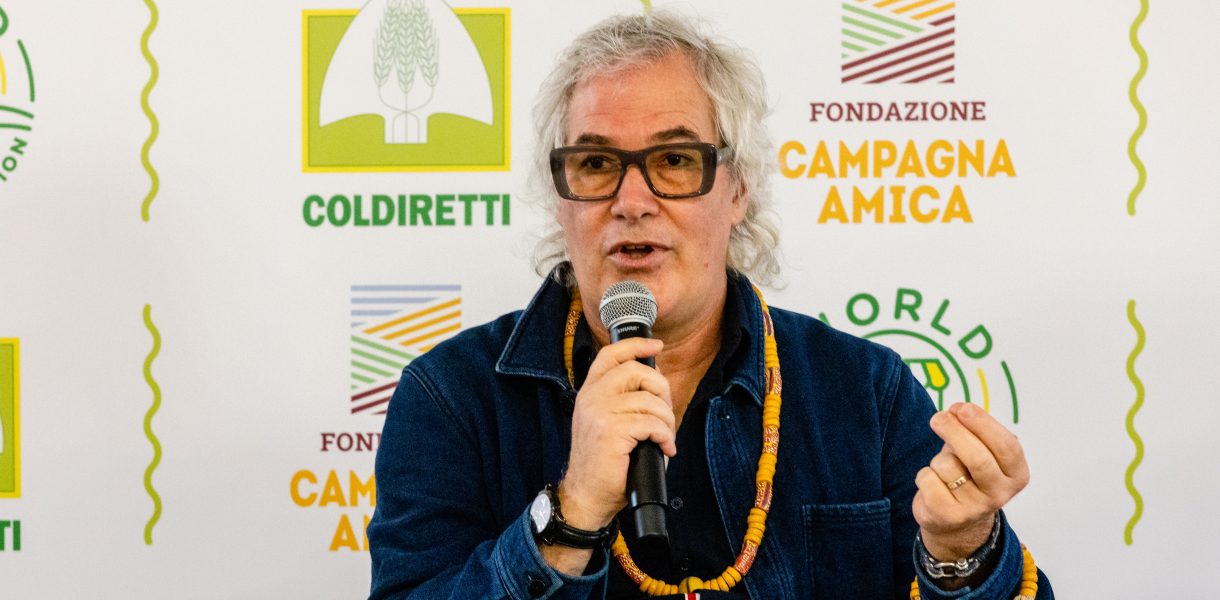
From Rome to Milan, farmers markets are on the menu. As aforementioned, October is hectic. After our General Assembly, we made the most of the talent in Italy to address a number of important meetings. I was pleased to address the Coldiretti International Public Forum in Rome on 14 October on a panel devoted to strategic agricultural investments in sub Saharan Africa. With the Italian government’s Mattei Plan, named for key figure in Italy’s post-war politics and energy policies, Enrico Mattei, as a backdrop, I described our experience building local food networks around the entrepreneurial spirit of farmers markets in Egypt, Kenya, and Tunisia (as part of the MAMi Farmers Markets Project with CIHEAM Bari). The next day, I traveled up to Milan for the Milan Urban Food Policy Pact’s 10 year anniversary conference to award one of the winners of the 2025 prizes (for which I helped review), and moderate a discussion: Transforming Urban Food Systems Through Food Markets. In collaboration with ICLEI, GAIN, CGIAR, we explored work in Korea, Kenya, Indonesia, and Colombia. I was delighted to give the floor to Nairobi’s Dennis Andaye and Bogotá’s Yurani Andrea Lopez Colmenares (both of the WorldFMC). Meanwhile, back in Rome, Canada’s Justin Cantafio addressed the generational challenge in family farming as a panelist for the session, “Future of Family Farming: Policy Innovations for Young Farmers.”
Fratelli Tutti. My Ottabrata Romana began in September, when I arrived in Rome for the Vatican’s Fratelli Tutti Foundation World Meeting on Human Fraternity. The entire weekend of activities was humbling and inspiring, with all sorts of recognized leaders in culture, arts, journalism and human rights, and agriculture. I was honoured to join colleagues from Peru and Kenya to share how farmers markets are quietly reconciling the huge gulf that has grown between the people of the countryside with the people of the cities. We addressed the “Roundtable on Food Security” at FAO on Friday, 12 September. With the backdrop of Pope Francis’s Encyclical, Fratelli Tutti, providing context, we explored which instruments are likely to deliver fraternity and solidarity for those most vulnerable in the pursuit of food. During the proceedings, considerable attention was devoted to the promise of AI in what is being described as precision agriculture. The future is unwritten, so who knows? However, I am not convinced that it is unlikely that technology will solve problems that are political. If anything, they tend to exacerbate existing problems, more than they magically solve all ills of the world. After all, even if technology is free from ideology, its deployment certainly is not. This point was made especially strong by Coldiretti Director General Enzo Gesmundo (as pertains to synthetic proteins). Needless to say, the discussions were pluralist, and gave ample opportunity for many differing points of view to be expressed. This sort of format is welcome and important during this particular moment in history. For our part, we kept it practical, and focused on the actions on the ground that unite commerce with community. After all, this is the heart of the farmers market strategy.
As October gives way to November, the work of the World Farmers Markets Coalition ramps up for more and more to come. Thank you to all who have joined us to restore dignity to farmers, consumers, and communities via farmers market strategies.