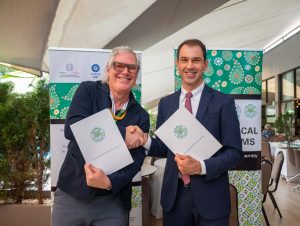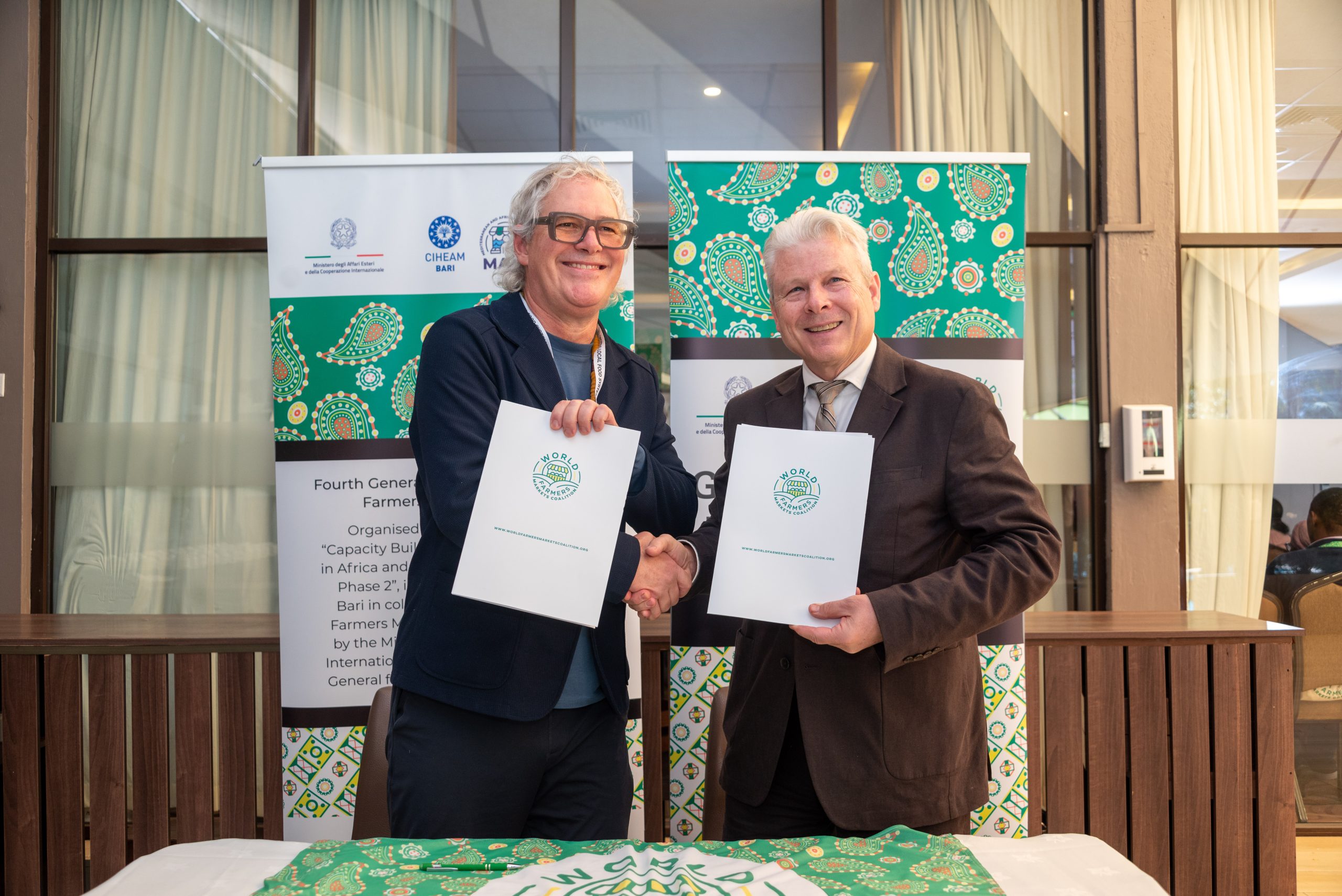
Nairobi, Kenya – 7 October 2026 – The World Farmers Markets Coalition (WorldFMC) and the United Nations Human Settlements Programme (UN-Habitat) have signed a Memorandum of Understanding (MoU) to strengthen collaboration on sustainable local food systems, farmers’ markets and urban-rural linkages.
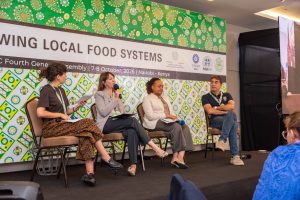
The agreement was signed during the WorldFMC Fourth General Assembly in Nairobi, under the theme “Growing Local Food Systems.” On behalf of the two organizations, the MoU was signed by Raf Tuts, Director of the Global Solutions Division at UN-Habitat, and Richard McCarthy, President of the World Farmers Markets Coalition.
The MoU establishes a framework for cooperation between UN-Habitat and WorldFMC to promote sustainable urbanization through stronger and more resilient local food systems. The partnership will focus on knowledge exchange, capacity development, policy and advocacy, and the development of joint initiatives, while strengthening connections across the urban-rural continuum.
The collaboration will include the generation and dissemination of knowledge and good practices; capacity strengthening for national and local governments and other stakeholders; the promotion of enabling urban policies and regulatory frameworks; improved market access, including through farmers’ markets; and sustainable food waste management, value addition and circular economy approaches.
UN-Habitat and WorldFMC will also work together on policy dialogue, research and learning, multi-stakeholder partnerships, joint advocacy and communication, as well as meetings, workshops and technical exchanges. The organizations will explore opportunities for joint initiatives, knowledge products, project development and resource mobilization.
For UN-Habitat, the partnership draws on its expertise in sustainable urbanization and engagement with governments and stakeholders. WorldFMC will contribute its technical knowledge and international experience in farmers’ markets and local food systems, supported by its global membership and networks.
The signing represents an important step in strengthening cooperation between the global farmers market movement and the UN system, and in advancing a shared vision of local food systems that connect farmers, consumers, communities, cities and rural areas.
As the WorldFMC gathers its global membership in Nairobi, the new partnership provides a platform to turn knowledge and dialogue into practical cooperation, helping build more inclusive, resilient and sustainable local food systems.
Previous articles
Recent Posts
From projects to impact: what national experiences are teachi...