How can farmers markets contribute to broader agrifood system transformation? And what can we learn when international organisations, local actors and farmers market networks work together?
These questions were at the centre of “National Projects of Excellence: Experiences from Around the World,” a session held during the World Farmers Markets Coalition’s Fourth General Assembly in Nairobi.
The panel brought together perspectives from international organisations and WorldFMC members to explore how practical programmes and projects are helping strengthen farmers markets, expand their role in local food systems and create new opportunities for collaboration.
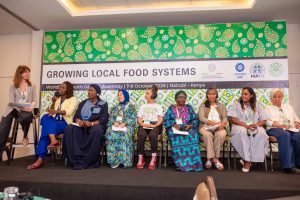
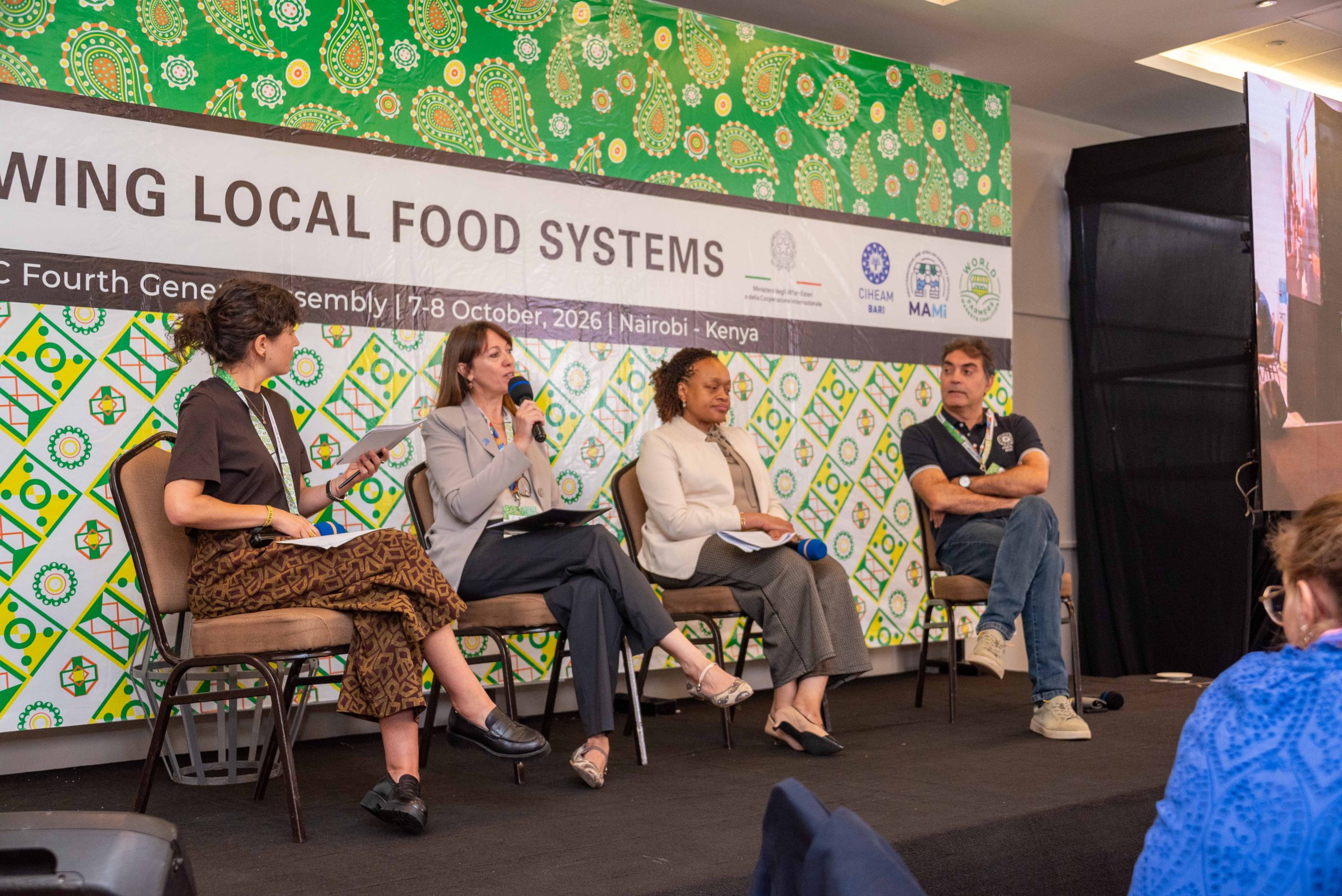
The first part of the discussion featured Valentina Sommacal, Senior Rural Institutions Specialist, Rural Transformation and Gender Equality Division at FAO; Sara Mbago-Bhun, Regional Director, East and Southern Africa Division at IFAD; and Enrico Azzone, Head of Unit “Sahel and Sub-Saharan Africa” at CIHEAM Bari. The conversation was moderated by Viola Capriola, Food Policy Advisor and Local Food Systems Development Manager at WorldFMC.
Rather than presenting projects as isolated initiatives, the conversation looked at what these experiences can tell us about the potential of farmers markets as practical tools for strengthening market access, supporting small-scale farmers, building resilient local food systems and creating opportunities for knowledge exchange and capacity development.
What are we learning?
Across different contexts, farmers markets are demonstrating that they can play a meaningful role in connecting small-scale producers with consumers and strengthening local value chains.
But the experiences discussed in Nairobi also raised an important question: what makes farmers markets effective strategies within broader agricultural and food-system programmes?
The answer lies not only in the markets themselves, but in the relationships, knowledge and local capacity that surround them.
By bringing together farmers, consumers, market managers, institutions and other local actors, farmers markets can create spaces where knowledge is exchanged, relationships are built and locally grounded solutions can emerge.
From opportunity to stronger participation
The discussion also explored where farmers markets can complement existing agricultural, rural development and food-system programmes, and where they still need to strengthen their capacities.
Being part of broader development programmes can create opportunities for farmers market organisations to access new knowledge, partnerships and resources. At the same time, participation in these programmes can help strengthen the evidence, methodologies and frameworks needed to demonstrate the wider contribution of farmers markets.
For WorldFMC, this exchange is particularly important.
The Coalition’s role is not simply to connect farmers market organisations across countries, but also to help make their experiences more visible and demonstrate how these local initiatives can contribute to wider development agendas.
From Ukraine to Peru and beyond
The second part of the session brought this idea to life through the experiences of three WorldFMC members.
Under the theme “What Has WorldFMC Changed? From Ukraine to Peru and Beyond: Sharing Best Practices,” members shared first-hand experiences of projects and collaborations in their respective regions.
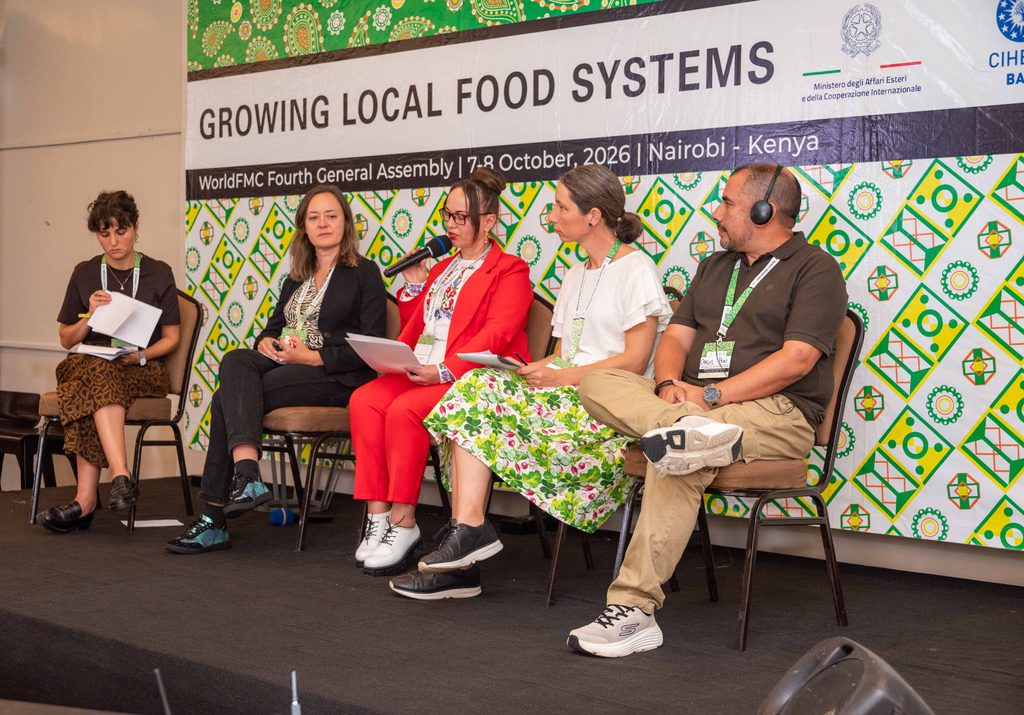
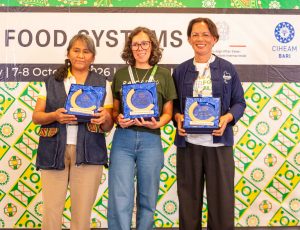
Alla Pecheniuk and Randi Ledaal Gjertsen, from the Institute of Socio-Economic Regional Studies in Ukraine and Bondens Marked Norway; Karolina Jarmolowska, from Fundacja Targ Pietruszkowy in Poland; and Carlos Ernesto Lazo Gago, from Agroferia Campesina in Peru, presented their experiences and reflected on how being part of WorldFMC has created new opportunities for collaboration and participation in international cooperation projects.
Their stories offered a practical perspective on what international networks can make possible at the local level: expanding connections, sharing experiences, accessing new opportunities and bringing knowledge from one context into another.
These experiences also highlighted an important principle behind the WorldFMC network: learning does not only flow from international organisations to local actors. It also flows between farmers markets themselves.
A market manager in one country may have a solution to a challenge faced by another. An approach developed in one region can inspire adaptation somewhere else. And a local experience can become evidence that helps demonstrate the wider contribution of farmers markets.
Turning experience into shared knowledge
Projects of excellence are valuable not only because of their immediate results, but because of what they can teach others.
Sharing practical experiences allows the WorldFMC community to identify what works, understand what can be improved and explore what might be replicated or adapted in other contexts.
This process of peer learning is essential to building a stronger global farmers market movement.
What comes next?
The conversation in Nairobi ultimately pointed towards a shared challenge: how can these experiences be strengthened, connected and scaled?
International organisations bring resources, expertise and broader development agendas. Local organisations bring knowledge, relationships and a deep understanding of their communities. Farmers market networks connect these experiences and create opportunities for exchange.
Bringing these strengths together can help move farmers markets from being recognised as individual local initiatives to being understood as practical and strategic tools for transforming agrifood systems.
For WorldFMC, this is at the heart of its growing programme of collaboration with international organisations and local partners.
The projects presented in Nairobi are different in context, scale and approach. But together, they demonstrate something important: when local experience is connected through a global network, it can become a source of learning, collaboration and new possibilities for farmers markets around the world.
Previous articles
Recent Posts
The Alliance of Bioversity International and CIAT and the Wor...