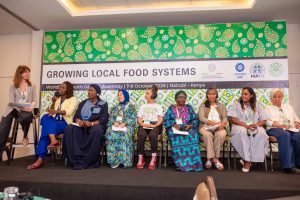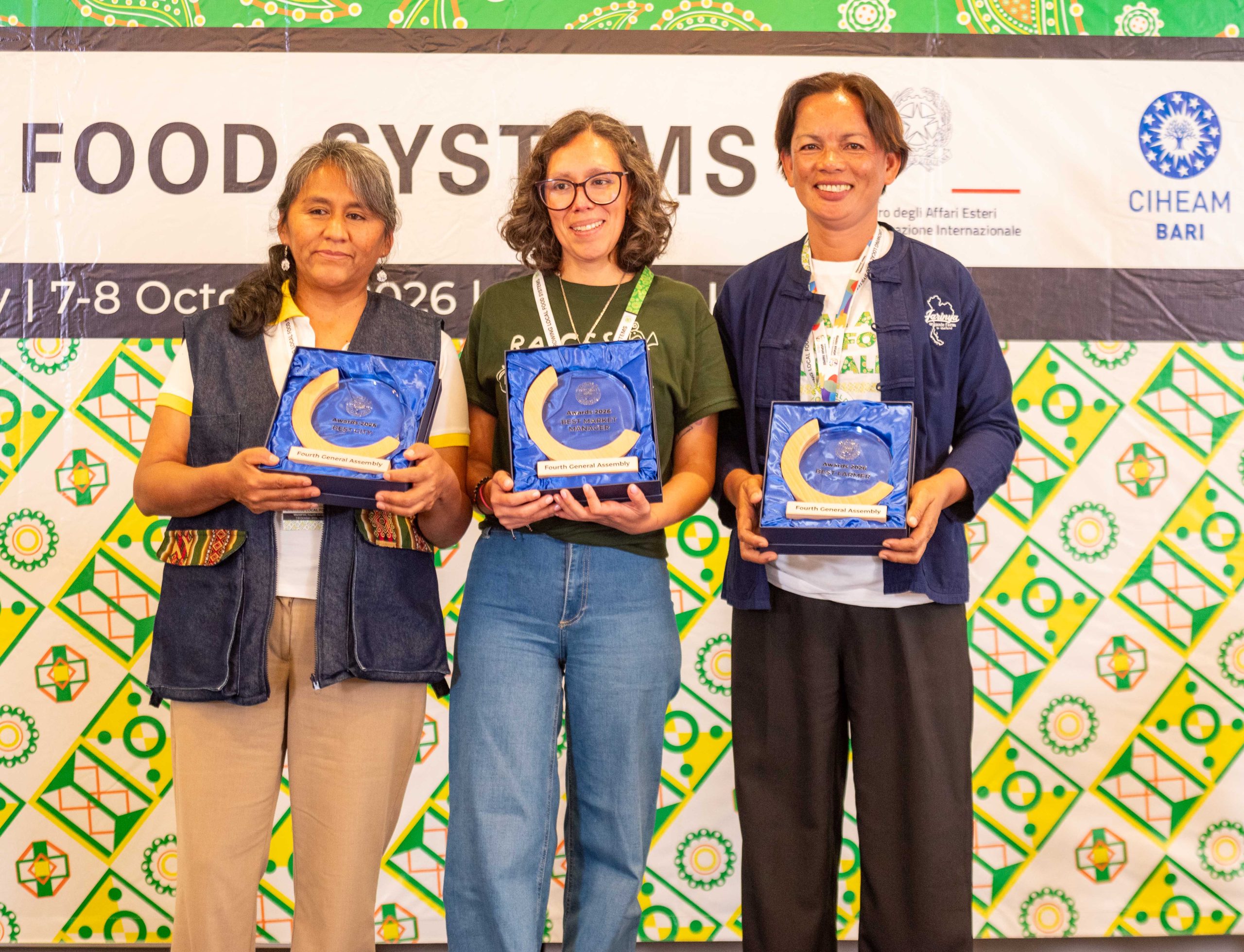
The second edition of the WorldFMC Awards came to a close during the World Farmers Markets Coalition’s Fourth General Assembly in Nairobi, bringing together members and partners from across the global farmers market movement to celebrate three outstanding stories of commitment, innovation and community.
Launched by the World Farmers Markets Coalition (WorldFMC) following the success of the first edition, the 2026 Awards received more than 100 candidatures from around the world. The call was open just to WorldFMC members, but a lot of individuals and organisations outside the Coalition wanted to join, reflecting the growing interest in the role of farmers markets and local food systems.
The Awards recognise excellence across three categories: Best Farmer, Best Market Manager and Best City. After a global selection process, nine finalists were identified, three finalists in each category.
A jury bringing together global expertise
The selection was entrusted to an international jury bringing together experts, practitioners and advocates working across farmers markets, food policy, local food systems, urban markets and international cooperation.
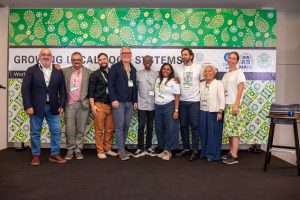
The 2026 jury was composed of Raoul Tiraboschi, Food Policy Advisor to the WorldFMC and expert in local food policies; Thiago Gomide Nasser, co-founder of Junta Local in Rio de Janeiro and WorldFMC Board Representative for Central & South America; Enrico Azzone, international cooperation expert and Head of the Sahel and Sub-Saharan Africa Geographical Unit at CIHEAM Bari; Kelly Verel, Co-Executive Director of Project for Public Spaces and lead of its Market Cities Program; and Richard McCarthy, community development specialist, writer and speaker, and President of the World Farmers Markets Coalition.
Their different backgrounds and areas of expertise brought a broad perspective to the evaluation process. The jury considered not only the achievements of each candidate, but also the wider impact of their work on producers, communities, local economies and the development of stronger food systems.
The Awards recognise excellence across three categories: Best Farmer, Best Market Manager and Best City. After a global selection process, nine finalists were identified, with a jury bringing together experts and advocates from the fields of farmers markets, food policy, international cooperation and urban markets.
The WorldFMC thanks all members of the jury for their time, expertise and commitment to recognising the people and places contributing to the growth of local food systems around the world.
This year’s winners represent three very different contexts and approaches, but share a common commitment: using local food systems to create stronger, healthier and more resilient communities.
Best Farmer: Jarinya Sonphungam, Thailand
The Best Farmer Award was presented to Jarinya Sonphungam of the Nonthaburi Food Policy Council in Thailand, recognising her remarkable journey towards organic farming and her commitment to building a more sustainable local food system.
Nearly two decades ago, Jarinya was running a farm based on conventional agricultural practices. Debt and health problems eventually led her to make a major change and move towards organic farming.
Today, she leads the Raj Niyom Organic Farm Group, bringing together 20 organic farmers producing vegetables, fruit and rice. Their products reach consumers through different local channels, including collective buying initiatives and the Nonthaburi Green Market.
But Jarinya’s work goes beyond production and market access. She has also been working with schools in her community to bring products from the farmers’ group directly into school catering, creating a connection between smallholder farmers, healthy food and younger generations.
Her farm has become a learning centre for organic agriculture, while the farmers’ group combines organic certification with a Participatory Guarantee System. Through her involvement with the Nonthaburi Food Policy Council, Jarinya also contributes to broader efforts to strengthen the local farmer network and promote healthy food across the region.
Her story is one of transformation, perseverance and shared responsibility, showing how an individual farmer can become a catalyst for change far beyond her own farm.
Best Market Manager: Ana Calderón, Mexico
The Best Market Manager Award went to Ana Calderón, agronomist and director of Mercado El 100 in Mexico City.
For more than 15 years, Ana has helped develop Mercado El 100 into a leading example of direct trade between producers and consumers in an urban environment.
Her work goes far beyond the day-to-day management of a market. Under her leadership, Mercado El 100 has developed a comprehensive approach that supports producers through technical advice, training and continuous accompaniment, while strengthening transparency and trust between farmers and consumers.
A key part of this work is the promotion of participatory organic certification, alongside educational activities, seed exchanges, tastings, workshops and cultural events that bring citizens closer to the origins of their food.
Ana has also placed strong emphasis on inclusion, supporting small-scale producers and women-led projects while creating opportunities for the market to build partnerships and connect with wider networks.
Mercado El 100 has become a recognised space for local food, food education and community building in Mexico City. Ana’s leadership demonstrates how a farmers’ market can become much more than a place of exchange: it can be a platform for strengthening local economies, supporting producers and reconnecting urban communities with food and agriculture.
Best City: Cochabamba, Bolivia
The Best City Award was presented to Cochabamba, Bolivia, represented by Asociación ECO Feria, recognising the progress made in creating a more supportive environment for agroecology, farmers markets and local food systems.
Cochabamba’s experience demonstrates the importance of connecting grassroots initiatives with public policies.
In recent years, municipalities in the region have taken significant steps towards recognising agroecology as an important strategy for building more sustainable, healthy and resilient food systems. Among these developments is the approval of a municipal law promoting agroecological production in Sacaba, while in Tiquipaya a participatory process is underway to develop legislation focused on agroecological production and food sovereignty.
At the same time, spaces such as ECO Feria are strengthening the connection between producers and consumers, supporting short food supply chains and creating opportunities for locally produced food to reach communities.
The experience of Cochabamba shows how cities can play an important role in creating the conditions in which local food systems can grow, through public policies, institutional support and spaces that bring farmers and citizens together.
Celebrating a global movement
The three winners come from very different places and work in very different contexts. Yet their stories reflect a common vision.
Jarinya Sonphungam shows how farming can become a driver of ecological, economic and social change. Ana Calderón demonstrates the power of thoughtful market management to connect producers, consumers and communities. Cochabamba highlights how public policies and local initiatives can work together to create a stronger environment for agroecology and local markets.
Together with the other finalists, they represent the many people and places working every day to strengthen local food systems around the world.
The WorldFMC Awards are therefore more than a recognition of individual achievements. They are an opportunity to bring these experiences into the global conversation, share what works and celebrate the people who are helping build food systems rooted in local communities, direct relationships, sustainability and resilience.
The World Farmers Markets Coalition congratulates Jarinya Sonphungam, Ana Calderón and Cochabamba and thanks all the finalists, candidates and members of the international jury for contributing to the second edition of the WorldFMC Awards.
Their stories remind us that change can begin on a farm, in a market or in a city, and that when these efforts come together, they can help shape stronger local food systems for the future.
Previous articles
Recent Posts
The Alliance of Bioversity International and CIAT and the Wor...