Building fairer, more resilient food systems starts with connecting farmers, consumers and communities.
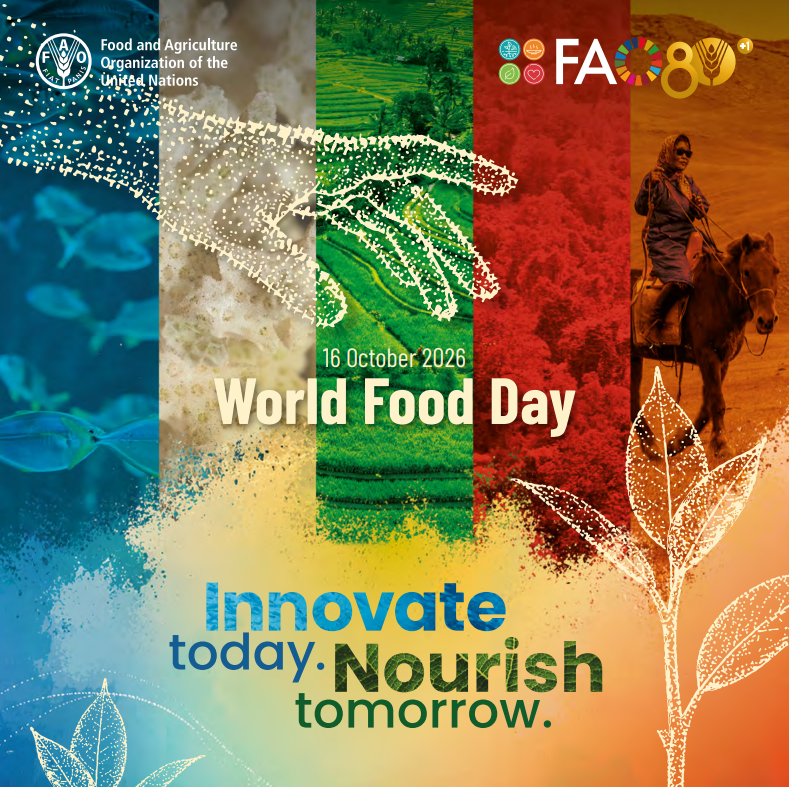
Every year on 16 October, World Food Day reminds us of one of humanity’s most fundamental challenges: ensuring that everyone has access to sufficient, safe and nutritious food. In 2026, the theme, “Innovate Today, Nourish Tomorrow,” calls for innovative solutions that combine scientific progress with traditional knowledge and inclusive approaches, helping ensure that food systems nourish everyone while protecting our planet for future generations.
At the World Farmers Markets Coalition (WorldFMC), we believe this vision must translate into concrete action. Ending hunger is not simply a matter of producing more food. It is also about ensuring that nutritious food is accessible and affordable, that farmers receive fair recognition for their work, and that local food systems are strong enough to respond to economic, social and environmental challenges.
A world of plenty, but not for everyone
The world already produces enough food to feed its population. Yet hunger and malnutrition remain persistent global challenges.
According to the figures provided for this year’s World Food Day article, an estimated 645 million people experience hunger, while 2.69 billion people cannot afford a healthy diet. These numbers reveal a fundamental contradiction: the availability of food does not automatically guarantee access to it.
The broader picture of food insecurity is equally concerning. The background data provided also estimates that around 2.1 billion people experience food insecurity, including 779 million facing severe food insecurity. For millions of families, access to adequate food remains uncertain, with consequences for health, education, livelihoods and quality of life.
Conflict, economic instability and climate-related shocks continue to disrupt agricultural production and supply chains. Rising costs and reductions in development and humanitarian assistance can further undermine the ability of vulnerable communities to access food. At the same time, food waste and the environmental pressures associated with current production and consumption patterns highlight the need to rethink how food is produced, distributed and consumed.
The challenge, therefore, is not only to produce enough food, but to build systems that ensure it reaches people in a fair, reliable and sustainable way.
Hunger is declining globally, but progress is uneven
Global figures can indicate progress while concealing significant regional inequalities.
The data provided for this article indicates that the number of people experiencing hunger has declined for three consecutive years, from approximately 688 million in 2022 to 659 million in 2024 and 645 million in the latest estimate cited. This is an encouraging development, but the overall picture remains far from reassuring.
In Africa, the situation has deteriorated considerably. The figures supplied indicate that 309 million people on the continent experience hunger, compared with 196 million a decade ago. Africa now accounts for approximately 48% of people experiencing hunger worldwide, highlighting the urgency of solutions that respond to local needs and structural challenges.
Asia has made progress overall, although the situation varies across the region. Western Asia, in particular, has experienced increasing hunger amid persistent conflict and instability. These regional differences remind us that there is no single solution to food insecurity: responses must reflect the realities of the communities affected.
The projections included in the background material also suggest that hunger could remain a major global challenge in 2030, with Africa expected to account for a substantial share of those affected.
These figures reinforce an essential message: progress must be measured not only by global averages, but by whether the people most at risk can access the food they need.
The real challenge: making healthy food accessible and affordable
Food security is not only about having enough calories. It is also about being able to afford a diverse, balanced and nutritious diet.
The estimated 2.69 billion people who cannot afford a healthy diet illustrate the scale of this challenge. Even where food is available, economic barriers can prevent people from accessing the variety of foods needed for good health.
This raises important questions about how value is distributed throughout food systems. Who benefits from food production? How much of the value reaches the people who grow it? What options are available to consumers, particularly those facing financial constraints?
Food waste adds another dimension to the problem. A substantial proportion of the food produced globally is lost or wasted, while many people struggle to obtain adequate nutrition. Reducing waste, improving distribution and strengthening local food systems can contribute to a more efficient use of resources. However, these efforts must go hand in hand with policies that address poverty, inequality and the structural barriers that limit access to food.
For WorldFMC, these challenges underline the importance of connecting the needs of farmers with those of consumers. A fairer food system must create viable economic opportunities for producers while expanding access to good-quality, nutritious food.
Farmers markets: local action with global relevance
Farmers markets offer a practical way to strengthen these connections.
By bringing producers and consumers together, they create opportunities to support local economies, shorten supply chains and make fresh, seasonal food more visible and accessible. They also provide something that is increasingly valuable in complex food systems: direct contact between the people who grow food and the people who eat it.
For farmers, direct marketing can help develop a loyal customer base, retain a greater share of the value generated by their work and communicate the knowledge behind their products. For consumers, farmers markets can provide opportunities to discover local produce, learn about seasonal foods and make more informed choices.
They can also support agricultural biodiversity by creating space for traditional crops, regional varieties and products that might otherwise struggle to find a place in standardised supply chains. By connecting diverse agricultural production with consumer demand, markets can help preserve food traditions and encourage greater appreciation of the resources on which food production depends.
Farmers markets are not, on their own, a solution to global hunger, nor can they replace the public policies and investments needed to guarantee access to food. Their contribution lies in being part of a broader response: community-based spaces where economic opportunity, food education, social connection and more sustainable consumption can come together.
FMCOUNT! 2025: listening to consumers and measuring impact
Recognising the potential of farmers markets is important, but demonstrating their contribution requires evidence. Understanding who visits these markets, what motivates their choices and how markets influence food environments can help strengthen their impact and inform better decisions.
This is the purpose of the Farmers Markets Count! (FMCOUNT!) campaign, an international initiative led by WorldFMC to examine the contribution of farmers markets across three interconnected areas: biodiversity, farmers’ livelihoods and consumers’ food environments.
During the week of World Food Day 2025, market leaders counted and surveyed shoppers across 23 farmers markets in 10 countries. More than 70 market leaders had been trained to conduct the surveys, helping develop a stronger culture of evaluation within the international farmers market movement.
The interim shopper findings offer valuable insights into the role these markets play in people’s everyday lives.
88% of surveyed shoppers were repeat visitors, while 60% reported visiting a farmers market at least weekly. These figures highlight the importance of markets as recurring community spaces, where trust can develop and relationships between producers and consumers can grow over time.
The survey also explored why people choose to shop at farmers markets. Taste and quality were the primary motivations for 34% of respondents. Another 27% identified organic products and/or food grown without synthetic chemicals as their main reason for visiting, while 20% cited local food.
Price was the primary motivation for 8% of respondents. This finding should not be interpreted as evidence that affordability is unimportant. Instead, it points to the complex relationship between price, perceived value, freshness and quality. If farmers markets are to contribute to more inclusive food environments, affordability must remain a central consideration.
One further finding stands out: 64% of shoppers said farmers markets introduce them to new ingredients. This demonstrates their potential to serve as places of learning and discovery, helping consumers explore food diversity, understand seasonal produce and engage more directly with the people who grow their food.
Together, these results show why farmers markets deserve greater recognition in discussions about sustainable food systems. They are not simply places to buy and sell products; they can also support food education, strengthen local relationships and encourage more informed consumer choices.
Innovating today means building on traditional knowledge
The 2026 World Food Day theme reminds us that innovation does not necessarily mean replacing traditional practices with new technologies. It also means recognising existing knowledge, adapting it to changing circumstances and creating inclusive ways to share it.
Farmers possess essential knowledge about seeds, soils, growing seasons, local ecosystems and the varieties that sustain their communities. This knowledge is particularly important as climate change places increasing pressure on agricultural systems and threatens the resilience of food production.
Innovation can therefore take many forms: improving farmers’ access to markets, developing more effective ways to connect producers and consumers, strengthening cooperation between local actors, collecting reliable data and facilitating the exchange of knowledge across communities and countries.
Farmers markets can bring these dimensions together. They provide spaces where agricultural traditions meet changing consumer needs, where diverse products can find an audience and where conversations about food can increase awareness of its social, cultural and environmental value.
FMCOUNT! reflects this approach. By helping market leaders evaluate their activities and share their findings, the campaign seeks to turn local experience into evidence that can inform better decisions, encourage continuous improvement and demonstrate the contribution of farmers markets to food systems.
WorldFMC: restoring dignity to farmers and strengthening local food systems
At WorldFMC, our commitment to a fairer and more sustainable food future goes beyond raising awareness. Through our international cooperation projects and our work with farmers market networks around the world, we seek to strengthen the relationships and capacities that make local food systems more resilient and inclusive.
Our work is guided by three closely connected priorities.
Restoring dignity and value to farmers. Farmers are essential to food security, yet the value of their work is not always adequately recognised or reflected in their earnings. By supporting direct relationships with consumers, encouraging cooperation and strengthening access to markets, we aim to help farmers improve their economic opportunities and gain greater recognition for their knowledge, labour and contribution to society.
Giving consumers better options and more informed choices. Everyone should have the opportunity to make meaningful choices about the food they eat. Farmers markets can bring consumers closer to fresh, seasonal and diverse products while helping them understand where food comes from and how it is produced. To ensure these opportunities are inclusive, affordability and accessibility must remain central considerations.
Strengthening local food systems. Communities need food systems that can withstand disruption, support local livelihoods and protect the resources on which future production depends. By connecting farmers, consumers, market organisers and other local actors, farmers markets can help strengthen local economies, encourage knowledge exchange and create more direct relationships between production and consumption.
These priorities are inseparable. Farmers need viable routes to market; consumers need access to good-quality, nutritious food; and communities need local systems capable of supporting both. International cooperation allows us to exchange experiences, adapt promising practices to different contexts and build a stronger collective response to shared challenges.
Nourishing tomorrow starts today
World Food Day is both a reminder of the scale of the challenge and an opportunity to reaffirm our shared responsibility.
Hunger and malnutrition cannot be addressed by a single intervention or organisation. They require coordinated action across food production, distribution, public policy, consumer access and environmental protection. They also require us to look beyond aggregate production figures and address the inequalities that prevent people from accessing the food they need.
The findings of FMCOUNT! 2025 demonstrate that farmers markets already play a meaningful role in people’s everyday food choices. Their ability to connect producers and consumers, introduce new ingredients and encourage regular engagement with local food makes them valuable partners in building more sustainable food environments.
But recognising their contribution is only the beginning. We must continue to invest in local food systems, support farmers in earning a dignified livelihood, make nutritious food more accessible and affordable, and protect agricultural biodiversity for future generations.
At WorldFMC, we believe that a better food future is built through collaboration: by connecting people, sharing knowledge and turning local initiatives into collective progress.
This World Food Day, let us innovate with purpose, restore value to the people who grow our food and strengthen the local systems that bring it to our tables. Nourishing tomorrow starts with the choices, partnerships and actions we make today.
Previous articles
Recent Posts
From projects to impact: what national experiences are teachi...