What happens when culinary heritage, local ingredients and farmers markets come together?
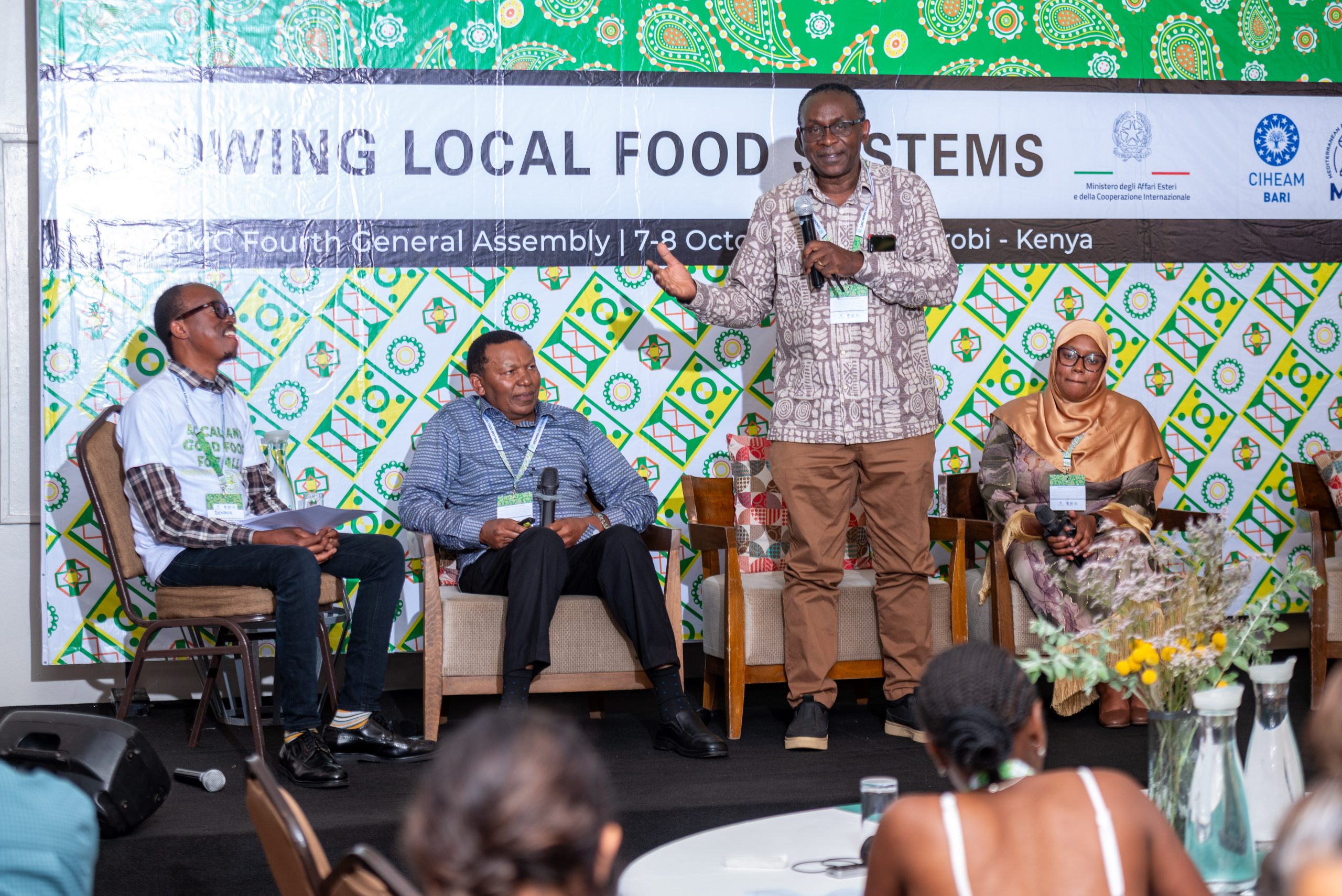
At the WorldFMC Fourth General Assembly in Nairobi, a dedicated session explored “The Kenyan Culinary Cultural Context: Influences and Ingredients, and Where Markets Come In,” looking at the relationship between Kenya’s rich food traditions, local production and the markets that connect farmers with communities.
Introduced by Dennis Andaye, Regional Coalition for Farmers Markets (RECOF), Kenya, the conversation brought together Patrick Maundu, Ethnobotanist at the Kenya Resource Centre for Indigenous Knowledge, National Museums of Kenya; Yasmin Taibu, Food and Public Health, Nairobi County; and Peter O. Mokaya, Director & CEO of OCA, Physician and Agro-Health Development Practitioner.
Together, they explored how Kenya’s culinary heritage is shaped by local ingredients, agricultural knowledge and cultural influences, and how farmers markets can help make this heritage visible, valued and relevant for the future.
Food heritage begins with local ingredients
Kenya’s culinary culture reflects the country’s rich diversity, agricultural heritage and the interactions between different communities and regions.
Food traditions have evolved through a combination of indigenous knowledge, local agricultural production and cultural influences, creating a diverse culinary landscape shaped by the ingredients available in different territories and the ways communities have learned to grow, prepare and share food.
At the centre of this heritage are locally produced and seasonal ingredients, from cereals and legumes to vegetables, fruits, roots and tubers, herbs and spices, as well as animal products.
Behind each of these ingredients is a network of farmers and food producers whose knowledge and practices help maintain local food traditions.
Where markets come in
Farmers markets can create an important bridge between culinary culture and local food production.
By bringing farmers, food producers, chefs, consumers and communities closer together, markets can provide spaces where local ingredients become more visible, and where their cultural and economic value can be recognised.
A tomato, grain, herb or traditional variety sold at a farmers market is not simply a product. It can also represent a particular landscape, farming practice, culinary tradition or piece of local knowledge.
Markets can therefore help tell the stories behind food while creating direct opportunities for the people who grow and produce it.
Keeping traditional ingredients on the table
One of the important questions raised by the session was how markets can contribute to the revival and continued cultivation of traditional crops and food varieties that risk disappearing. Demand matters.
When consumers, chefs and other food businesses seek local and traditional ingredients, they can create new market opportunities for farmers. This can encourage producers to continue cultivating crops and varieties that might otherwise become less viable.
Farmers markets can therefore become more than places where existing products are sold. They can also become drivers of demand, helping create the economic conditions for agricultural and culinary diversity to continue.
Connecting farmers, chefs and consumers
The relationship between food culture and markets also depends on the connections between the people who produce, prepare and eat food.
Farmers bring knowledge of crops, seasons and agricultural practices.
Chefs can help transform local ingredients into new culinary experiences and introduce them to wider audiences.
Consumers, meanwhile, play a role through the choices they make and the value they place on local and seasonal food.
Farmers markets can bring these different perspectives together in one space, creating opportunities for exchange, food education and greater appreciation of local ingredients.
From preserving heritage to creating the future
Preserving culinary heritage does not necessarily mean keeping food traditions unchanged. It can also mean creating opportunities for them to evolve.
When local ingredients are valued by farmers, markets, chefs and consumers, culinary traditions can become a source of innovation as well as preservation. New recipes, new forms of presentation and new connections between producers and consumers can emerge while remaining rooted in local ingredients and knowledge.
This is where farmers markets can play a particularly important role: they can provide spaces where heritage and innovation meet.
Food culture as part of local food systems
The discussion in Nairobi offered a reminder that local food systems are not only about production and supply chains.
They are also about culture, identity, knowledge and relationships.
The ingredients found in a market reflect the agricultural landscapes around it. The people selling them carry knowledge passed between generations. And the consumers who buy and cook them contribute to keeping food traditions alive.
Strengthening these connections can create value that is economic, social and cultural at the same time.
As the WorldFMC community continues to explore the many dimensions of local food systems, Kenya’s culinary context provides a powerful example of why markets matter.
Because when local ingredients have a place in the market, local knowledge and food culture can have a place in the future.
Previous articles

Recent Posts
From projects to impact: what national experiences are teachi...