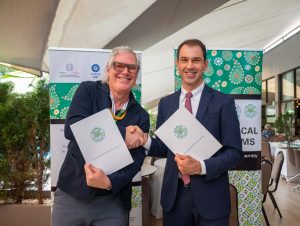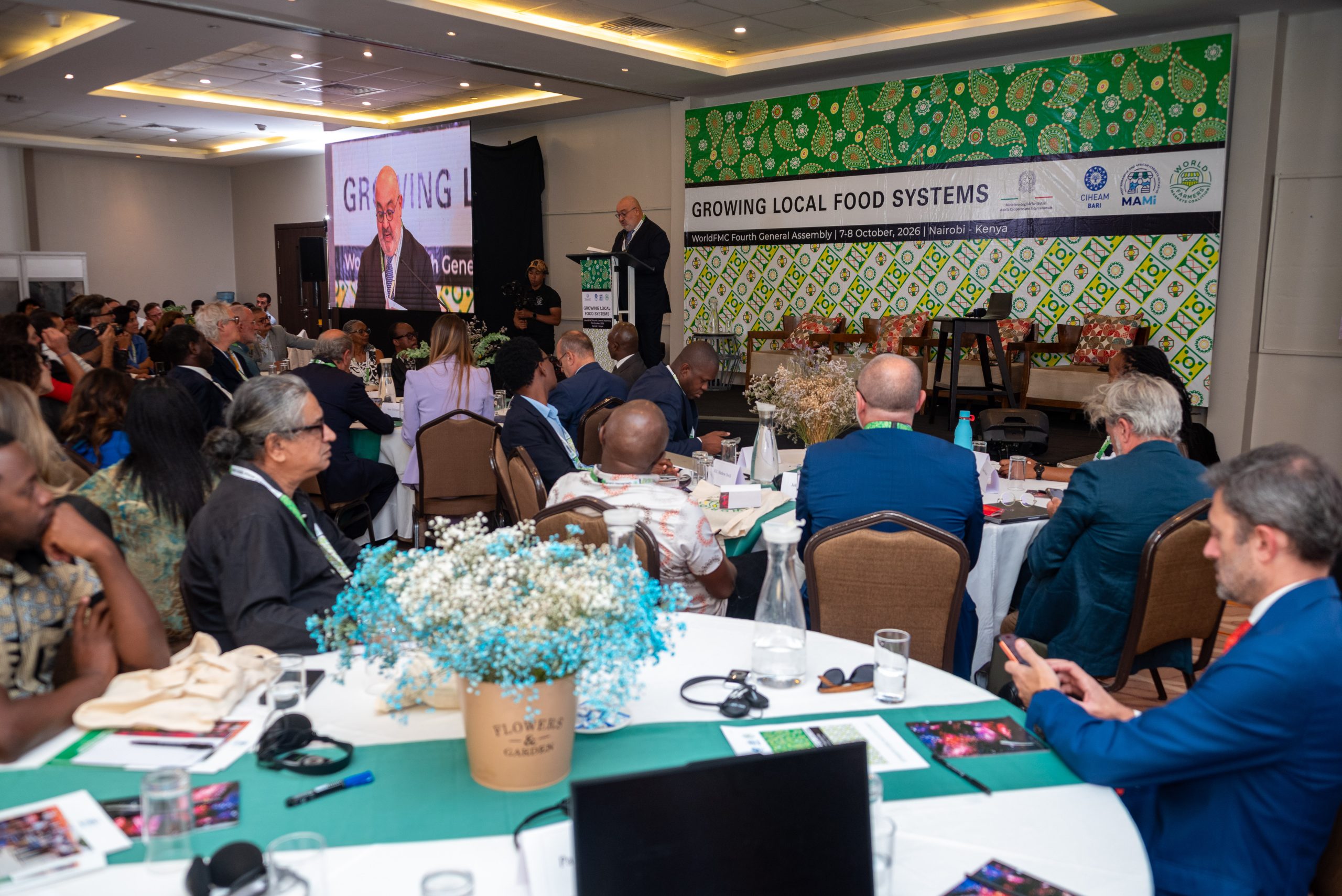
The World Farmers Markets Coalition’s Fourth General Assembly officially opened in Nairobi on 7 October, bringing together the WorldFMC community around a shared ambition: Growing Local Food Systems.
For the first time since the Coalition’s foundation, the General Assembly is taking place outside Italy, bringing together farmers market organisations, practitioners, partners and institutional representatives from around the world to exchange experiences and strengthen their collective commitment to local food systems.
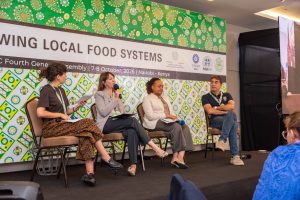
The Opening Ceremony set the scene for two days of discussion, exchange and collaboration, placing local food systems and the role of farmers markets at the centre of the conversation on the future of food.
The ceremony opened with a welcome and introductory remarks from Carmelo Troccoli, Director General of WorldFMC, who also introduced a video in memory of Carlo Petrini, recognising his contribution to the global movement for sustainable, local and community-based food systems.
Carmelo’s opening was followed by a welcome from Dennis Andaye, CEO of the Regional Coalition for Farmers Markets (RECOF), who welcomed participants to Nairobi and to the first WorldFMC General Assembly to be held outside Italy.
The ceremony then brought together perspectives from farmers’ organisations, international institutions and public authorities, highlighting the importance of connecting global ambitions with local realities.
Putting farmers and food at the centre
Among the opening speakers was Daniel Mwendah M’Mailutha, CEO of the Kenya National Farmers’ Federation (KENAFF) and President of the World Farmers’ Organization (WFO), who emphasised the fundamental importance of food and the need for collective action. “Without food there would be chaos in society and nations. We have not to give up. Our unity is our strength.”
His message highlighted the central role of farmers in food systems and the importance of strengthening cooperation across organisations and countries to address the challenges facing food and agriculture.
Oumar Sylla, Regional Director of UN-Habitat’s Regional Office for Africa, brought the conversation to the question of access and dignity. “Providing access to food for all is a matter of dignity. We need to bring food systems to the centre. Farmers markets improve access to local food.”
His remarks underscored the connection between food, communities and cities, and the role that local food systems can play in creating more inclusive and accessible urban environments.
The importance of linking global challenges with local action was also highlighted by Vincenzo Del Monaco, Ambassador of Italy to the Republic of Kenya and Seychelles and Permanent Representative to UNEP and UN-HABITAT. “Global challenges have very local solutions. The real strength of WorldFMC is its global vision rooted in local communities.”
He also emphasised that development must go beyond economic growth, creating systems that are economically valuable while remaining socially inclusive.
Why local food systems matter
Under the theme “Growing Local Food Systems,” the Opening Ceremony highlighted the strategic role that local food systems can play in building food systems that are more sustainable, resilient and inclusive.
Strengthening local food systems means strengthening the connections between food production and consumption, supporting local economies, encouraging more sustainable agricultural practices and improving access to fresh, local and seasonal food.
It also means recognising that food systems are deeply connected to the communities and territories in which they operate.
For Giorgio Salvitti, Senator and Advisor to the Italian Minister for Agriculture and Food Sovereignty, farmers markets are an important part of this connection, particularly because of their contribution to local economies and short food supply chains. “Creating an economy means keeping people in their territories. Farmers markets are fundamental to maintaining local economies and developing healthy food systems. Short food supply chains are not a niche; they are a model that works.”
He further highlighted the broader social value of farmers markets, noting that they can support local economies while helping to keep communities and territories alive.
Farmers markets as part of the solution
Within these local systems, farmers markets have an important role to play.
By creating direct relationships between farmers and consumers, farmers markets can shorten the distance between production and consumption while creating opportunities for farmers to receive greater recognition and value for their products.
For consumers, they offer access to fresh, local and seasonal food while creating greater awareness of where food comes from and how it is produced.
But their contribution extends beyond the economic relationship between producer and consumer.
Farmers markets can support local and rural economies, strengthen small-scale producers, preserve local food traditions and create stronger connections between farmers, consumers and communities. They can also contribute to more sustainable patterns of consumption by encouraging the availability and appreciation of local and seasonal products.
The opening discussions made clear that farmers markets should therefore be seen not simply as places where food is exchanged, but as part of a wider ecosystem connecting agriculture, communities, economies, health and territories.
From local action to institutional support
The Opening Ceremony also underlined an essential point: the development and long-term sustainability of farmers markets cannot depend solely on farmers and market organisers.
An enabling policy and institutional environment is essential.
Public institutions have a key role to play in creating the conditions in which farmers markets can develop and expand, from providing suitable spaces and improving regulatory frameworks to strengthening producers’ capacities, raising consumer awareness and integrating farmers markets into broader food-system strategies.
The contributions from Kenyan, Italian and international institutional representatives offered different but complementary perspectives on how public policy and international cooperation can support local food production and consumption.
For Kimani Ichung’wah, Member of Parliament for Kikuyu Constituency and Leader of the Majority Party in the National Assembly, hosting the General Assembly in Kenya was an opportunity to underline the country’s deep connection with agriculture. “Thank you for choosing Nairobi as your host country for the first General Assembly outside of Italy. We are a farming nation, and our economy depends heavily on agriculture. A large part of our population depends on agriculture not only for food, but also for employment.”
His remarks highlighted the strategic importance of agriculture to Kenya’s economy and the livelihoods of its people, reinforcing the relevance of strengthening local food systems in an agricultural country such as Kenya.
A global coalition, a local ambition
The opening of the Fourth General Assembly in Nairobi is itself a reflection of the growing international dimension of the WorldFMC community.
Farmers markets operate in very different contexts around the world, but many share common ambitions: supporting farmers, strengthening local economies, connecting communities with food and building more resilient food systems.
Bringing these experiences together allows the Coalition to strengthen the visibility and recognition of farmers markets while creating opportunities for knowledge exchange, collaboration and collective action.
The Nairobi General Assembly is therefore more than a gathering. It is an opportunity to ask what farmers markets can contribute to the transformation of food systems, and what is needed from institutions, organisations and communities to help them realise that potential.
Growing local food systems together
The Opening Ceremony concluded with final remarks from Richard McCarthy, President of WorldFMC, who brought together the different perspectives shared throughout the session and looked ahead to the discussions and exchanges that will shape the General Assembly.
The opening set an ambitious tone for the days ahead.
Building stronger local food systems requires action at many levels: from farmers and market organisers to cities, governments, international organisations and civil society. It requires investment, supportive policies, collaboration and, above all, recognition that local food systems are an essential part of building a more sustainable and resilient future.
As the WorldFMC community begins its Fourth General Assembly in Nairobi, one message stands at the heart of the gathering: growing local food systems means growing the connections, opportunities and partnerships that allow them to thrive.
Previous articles
Recent Posts
From projects to impact: what national experiences are teachi...