How can local food systems contribute to food security, resilience and sustainable territorial development? And what can cities learn from one another?
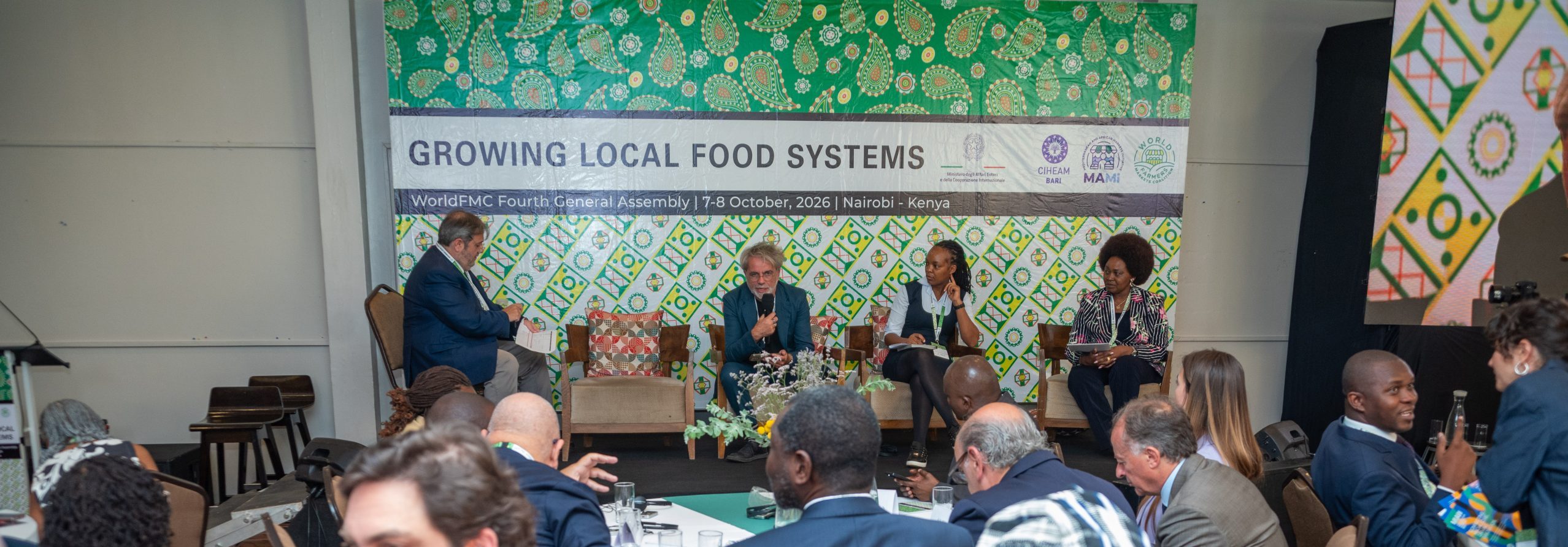
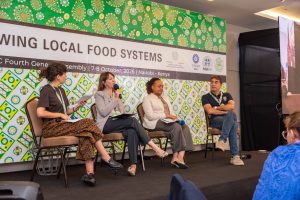
These questions were at the centre of the session “The Role of Local Food Systems in Ensuring Food Security – City Experiences and Models of Local Territorial Development,” sponsored by CIHEAM Bari and held during the World Farmers Markets Coalition’s Fourth General Assembly in Nairobi.
Bringing together international organisations and local government representatives from Africa and Europe, the session explored how cities can use local food systems as a strategic tool to strengthen food security, connect urban and rural areas, support local economies and build more resilient communities.
The session was moderated by Massimo Zaurrini, journalist, and featured contributions from Damiano Petruzzella, Project Manager and Scientific Administrator at CIHEAM Bari; Gladwell Cheruiyot, Chief Officer of Food, Agriculture and Natural Resources at Nairobi City County; and Grace Githiri, responsible for the Urban-Rural Linkages (URL) Programme at UN-Habitat.
The discussion then brought together municipal and territorial experiences from Isabella Ligia, Head of the Strategic Planning and Programming Department of the Metropolitan City of Cagliari, Italy; Jacorcel Obabaka, Municipal and Departmental Councillor of Brazzaville, Republic of Congo; Genci Kojdheli, Director General for Integration, Strategic Planning and Economic Development; and Mathew Owili, Deputy Governor of Kisumu County, Kenya.
Local food systems as a lever for food security
Food security is often discussed at the global or national level. But the session highlighted the importance of looking at food at the scale of the territory.
Local food systems bring together production, markets, consumption, natural resources, communities and institutions. Strengthening these connections can help territories become more resilient while creating economic, social, cultural and environmental value.
As the discussion highlighted, “local” does not necessarily mean small. It means strategic and place-based, understanding how food moves through a territory and how different actors can work together to make those systems stronger.
From networking to governing together
One of the central themes of the session was the importance of moving beyond simply connecting actors towards shared decision-making and coordinated action.
Food councils, multi-actor platforms, dedicated resources and shared monitoring can help cities create stronger forms of food governance, bringing together local authorities, producers, civil society and other stakeholders.
This participatory approach can help ensure that food is not treated as an isolated sector, but becomes part of broader conversations around territorial planning, economic development, health, climate and the environment.
Connecting cities and their rural hinterlands
Strong local food systems also depend on stronger urban–rural linkages. Cities rely on surrounding territories for food production, while rural areas depend on urban markets and consumers. Recognising this interdependence can help local governments move towards more integrated territorial planning.
The contribution from Grace Githiri of UN-Habitat focused on this relationship and on the role of the Urban-Rural Linkages approach in strengthening food security and resilience.
For rapidly growing cities such as Nairobi, these connections are particularly important. Gladwell Cheruiyot presented Nairobi’s experience in coordinating food, agriculture and natural resources, including the role of urban agriculture and markets in feeding a growing city.
Farmers markets can be part of this picture by connecting local producers with urban consumers and creating direct channels through which local food can reach city populations.
Cities putting local food into practice
The round table brought these broader questions into concrete territorial experiences.
From Cagliari to Brazzaville and Kisumu, local authorities shared different approaches to integrating food into strategic planning and local development.
In Cagliari, Isabella Ligia presented the experience of linking local production, short supply chains and public procurement within metropolitan strategic planning.
In Brazzaville, Jacorcel Obabaka shared the city’s food supply challenges and its interest in investing in farmers markets, including opportunities for future collaboration with WorldFMC.
Genci Kojdheli reflected on the role of food within strategic planning and local economic development, including its potential to create jobs, attract investment and connect producers with urban markets.
Meanwhile, Mathew Owili presented Kisumu County’s experience in building urban food governance and the importance of bringing county authorities, producers and civil society into the process of deciding how food systems should develop.
Creating multidimensional value
A key message emerging from the session was that the value of local food systems cannot be measured only in terms of food production or economic output.
Strong local food systems can generate economic value by supporting local income, employment and short supply chains.
They can create social and cultural value by strengthening community cohesion and local food identity.
They can generate environmental value through biodiversity conservation, better management of natural resources and reduced food loss and waste.
And they can create value through participatory governance, by giving producers, citizens and other local actors a role in shaping the food system.
The question is therefore not simply whether a local food system produces food, but: Does it co-create multidimensional value for the local community?
From pilots to scale
The experiences shared in Nairobi also pointed towards the importance of international cooperation.
Cities and local governments are experimenting with different approaches, but they do not need to work in isolation. Peer exchange, knowledge platforms and networks connecting local food systems can help cities learn from one another, adapt successful approaches and strengthen the capacity to move from individual pilots towards broader systemic change.
The session also formed part of the participatory process towards the UN Food Systems Summit +6 in 2027, placing local experiences within a wider international conversation about food security and food-system transformation.
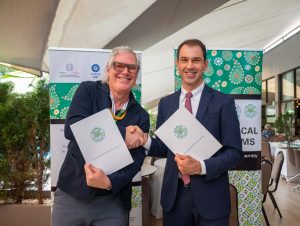
The launch of a Memorandum of Understanding between WorldFMC and the Municipality of Brazzaville further underlined the importance of turning shared ambitions into concrete partnerships.
Building food-secure territories together
The city experiences shared during the session demonstrated that there is no single model for building a strong local food system. Every territory has its own challenges, resources and opportunities.
But there are common principles: connecting urban and rural areas, strengthening local production and markets, involving communities in decision-making, integrating food into strategic planning and creating partnerships that can turn shared goals into action.
For WorldFMC, connecting these experiences is an essential part of strengthening the global farmers market movement.
Because building food security does not only happen at the global level. It also happens in cities, in rural communities, in markets, and in the connections between them.
Previous articles
Recent Posts
From projects to impact: what national experiences are teachi...