What can international cooperation do for local food systems, and what does it mean for organisations and communities to be part of a global movement?
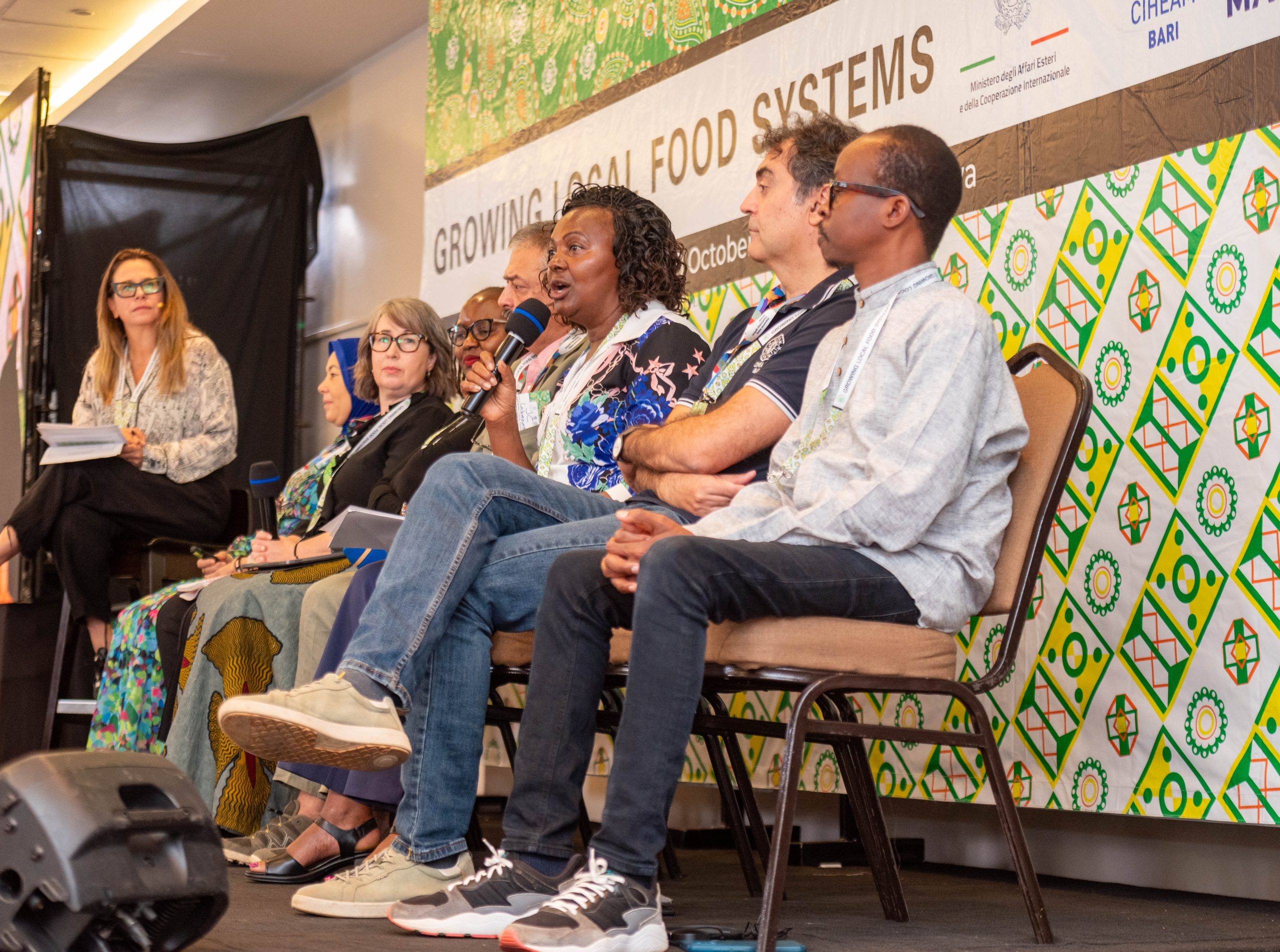
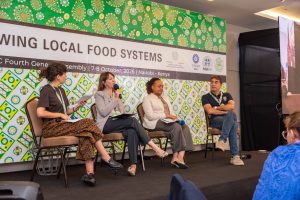
These questions were at the centre of “Beyond Impact: Why Being Part of an International Cooperation Association Matters,” a panel held during the World Farmers Markets Coalition’s Fourth General Assembly in Nairobi.
Moderated by Barbara Billocci, WorldFMC, the conversation brought together Winfred Katumo, Representative of Nairobi in the MUFPP Steering Committee; Kristie Daniel, Director of the Livable Cities Program at HealthBridge Foundation of Canada; and Wanjiru Kamau-Rutenberg, Managing Director, Africa, and Trustee, Bioversity International USA-CGIAR.
Together, they reflected on the role of international networks in a world facing challenges that increasingly cross borders, from climate change and biodiversity loss to conflict, food supply disruptions, growing inequalities and declining trust in international institutions.
Why cooperation matters
The challenges facing food systems and communities today cannot always be addressed by individual organisations, cities or countries working alone.
International cooperation can create the connections needed to share knowledge and resources, build alliances and develop collective responses. But it can also serve another important purpose: making sure that the voices and experiences of local communities are represented in wider conversations and decision-making processes.
For Winfred Katumo, this role is particularly important at the city level. Municipalities can act as a bridge between local communities and international cooperation, translating community needs into policies, budgets and concrete action. “We need to make sure everyone is included, young people, women, everyone. Municipalities can be a bridge between communities and international cooperation. We translate issues into budgets to understand what can be done. International cooperation has a big role to play in supporting the implementation of communities’ needs.”
The panel also explored the importance of ensuring that local food actors are part of wider policy and development conversations. As Kristie Daniel highlighted, farmers markets have an important role to play in generating evidence and demonstrating their contribution to healthier and more sustainable food systems. “It’s important that markets are part of this discussion. We know that what is measured is what gets done.”
Being part of an international network is therefore not simply about having a presence beyond national borders. It can mean gaining access to new relationships, experiences and opportunities for collaboration, while also creating a stronger collective voice for the communities an organisation represents.
From global connections to local impact
For WorldFMC, international cooperation is closely connected to its mission of bringing farmers markets and local food actors together across countries and regions.
The value of a global network becomes particularly clear when connections lead to concrete opportunities for collaboration.
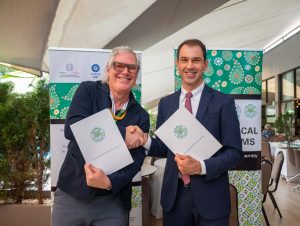
A key example discussed during the session was MAMi II, a cooperation project implemented by CIHEAM Bari with WorldFMC and funded by The Italian Ministry of Foreign Affairs and International Cooperation. The first phase contributed to the creation of an emerging network of farmers markets, connecting market managers and stakeholders from different countries. The second phase will build on this experience, further strengthening the network and creating new opportunities for collaboration and exchange.
The experience of MAMi also shows how international cooperation can create a pathway from an initial project to longer-term collaboration. As Enrico Azzone, Head of Unit “Sahel and Sub-Saharan Africa” at CIHEAM Bari, explained, the results achieved through the first phase helped demonstrate the value of continuing the work. “Thanks to the work and results achieved through the MAMi project, the donor decided to continue the initiative through a second phase, giving life to MAMi II. Organisations can build relationships with NGOs and other donors around strong projects and find opportunities for funding. Even starting with a small project can be an important first step.”
From collaboration to action: the MAMi II experience
The panel was followed by a roundtable dedicated to the second phase of MAMi II, offering a concrete example of what international cooperation can make possible.
Enrico Azzone introduced the discussion, joined by Eman Seif, Vice Secretary General of the Alexandria Chamber of Commerce, Egypt; Jean Charles Khairallah, President of the Lebanon Farmers Markets Coalition; and Dennis Andaye, CEO of the Regional Coalition for Farmers Market, Kenya.
The discussion provided an opportunity to reflect on the experience of the first phase and on what comes next for the farmers markets and communities involved.
For Eman Seif, however, the ambition must go beyond simply connecting organisations. The real goal is to create a lasting community of practice where farmers markets can learn from and support one another. “Building an international network of organisations is not enough. The broader goal is to build a community of practice for farmers markets, a community where markets learn from one another, support one another and work together to develop shared solutions.”
For Jean Charles KHAIRALLAH, President Lebanon Farmers Markets Coalition, the first phase of MAMi laid the foundations for a much broader ambition: creating lasting opportunities for small-scale producers and strengthening the local food systems that support them. “This MAMi I initiative marked the start of a wonderful journey, the seed of a project far greater than we could ever have imagined, designed to enable every small-scale producer in Lebanon to make a decent living from their work.”
For Dennis Andaye, international cooperation can also provide the opportunity to learn from successful models while ensuring that solutions are adapted to local realities rather than simply replicated. “In my country, there are many NGOs, donors and funding opportunities, but it is important to create something that can continue over time, even when project funding ends. We looked at successful farmers market models, such as Campagna Amica, and wanted to understand how we could adapt that model to Kenya. The goal is not to copy it, but to modify it so that it fits our communities and our food system.”
His experience illustrates an important principle of international cooperation: knowledge can travel across borders, but solutions need to remain rooted in local contexts.
The experience demonstrates that international cooperation does not have to remain at the level of dialogue. When organisations and communities are connected through a shared purpose, networks can become platforms for practical exchange, capacity building and joint action.
Building alliances around shared challenges
At a time when differences are often emphasised over common interests, international networks can help remind us of what connects communities across borders.
Farmers markets may operate in very different social, economic and cultural contexts, but many face common challenges: ensuring fair opportunities for farmers, strengthening local economies, connecting producers and consumers, preserving biodiversity and building resilient food systems.
Sharing these experiences does not mean creating one model that works everywhere. It means learning from different contexts, adapting ideas and building solutions together.
This is also where international cooperation can create an important bridge between research, practice and policy. Christine Chege, Senior Scientist and Global Lead for Market Systems for Healthy Diets at CGIAR, highlighted how international networks allow knowledge and successful approaches to be shared while avoiding simple replication. “International networks are important for research purposes. When we have a model that works well in one country, we don’t simply duplicate it. We adapt it and see whether it can work in another context. Through international cooperation, it is possible to address nutrition issues across several countries”.
Her point reflects the broader value of international exchange: the objective is not to find a single model for local food systems, but to create the conditions for continuous learning and adaptation.
From being connected to acting together
The discussion in Nairobi highlighted an important distinction: being part of an international network is valuable not simply because it connects organisations, but because it creates the conditions to act together.
For WorldFMC, this means continuing to create spaces where farmers market organisations, cities, institutions and local food actors can exchange experiences, develop partnerships and strengthen their collective voice.
The MAMi II project is one example of what can happen when those connections move from dialogue to collaboration, and from collaboration to concrete action.
Because building stronger local food systems may start locally, but the challenges we face — and the solutions we need — are increasingly global.
Previous articles
Recent Posts
From projects to impact: what national experiences are teachi...