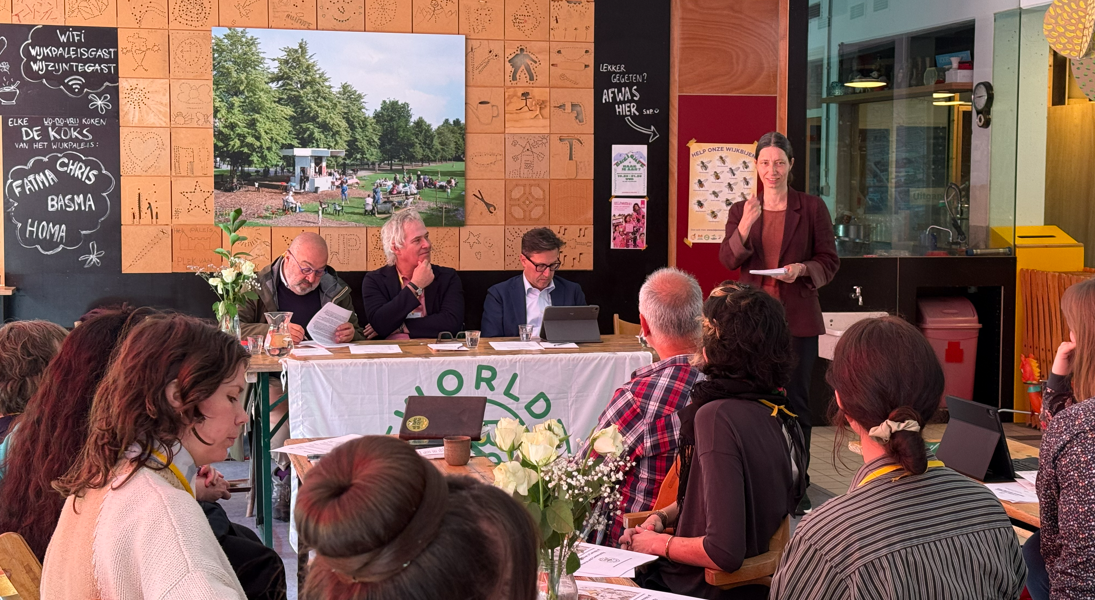
At the 2nd WorldFMC European Regional Meeting in Rotterdam, Randi Ledaal Gjertsen, CEO of Bondens marked Norge reflected on the shared realities that unite farmers markets across Europe despite the vast differences in geography, climate, and national contexts.
Opening her remarks with a light-hearted observation about the flat landscapes of the Netherlands compared to Norway, Ledaal Gjertsen highlighted how, regardless of local differences, farmers markets everywhere generate the same sense of connection between producers and consumers.
Different Countries, Shared Experiences
“The context, landscape, climate, and conditions may vary greatly from country to country,” she noted, “but when we visit farmers markets, we find the same energy, the same pleasure in the connection between food producers and customers.”
For Ledaal Gjertsen, this shared spirit is what makes farmers markets such powerful spaces of exchange, not only for food, but also for knowledge, culture, and community.
At the same time, she acknowledged that the operational challenges facing markets across Europe are remarkably similar. From regulations and funding to recruitment, logistics, and communication, market organisers everywhere are navigating increasingly complex realities.
Farmers’ Markets Are More Complex Than They Seem
One of the central messages of her speech was the need to better recognise the complexity and professionalism involved in running farmers markets.
“What we do may sound simple when we describe it,” she explained, “but we know that running a farmers market involves many actors, cultures, and logistical challenges.”
Behind every successful market lies a continuous effort of coordination, adaptation, and problem-solving, work that often remains invisible to the wider public and institutions.
Celebrating Successes and Building Resilience Together
Ledaal Gjertsen also encouraged market organisers to focus not only on challenges, but also on achievements.
As practitioners constantly working to improve, she observed that farmers market organisers often focus on what could be better, rather than recognising how much has already been accomplished.
“My experience is that we should celebrate our wins,” she said, calling for greater visibility of the positive impact farmers markets generate within local food systems and communities.
She stressed the importance of collaboration, exchange, and collective learning as essential tools for building more resilient farmers markets across Europe.
Strengthening Recognition Through Coalition Building
Concluding her intervention, Ledaal Gjertsen underlined the strategic importance of international cooperation through the World Farmers Markets Coalition.
According to her, bringing together like-minded organisations and leaders is fundamental for increasing recognition of farmers markets and demonstrating their role in building stronger local food systems.
“Together we can show how important farmers markets are,” she concluded, “for creating more local food systems.”
Her speech ultimately highlighted a key message of the Rotterdam meeting: while farmers markets may operate in different national contexts, they share common values, common struggles, and a common vision for the future of food.