Remarks delivered by Richard McCarthy, President, World Farmers Markets Coalition
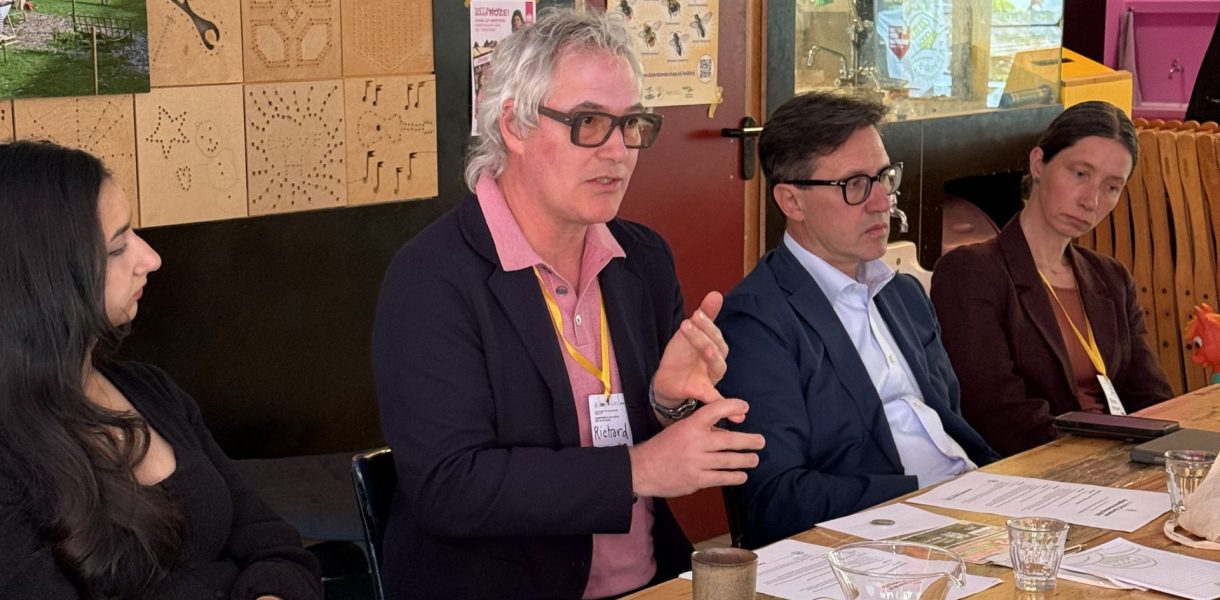
Listening to the insights from the farmers market leaders assembled in Rotterdam for the 2026 European Regional Meeting, I was struck by the self-awareness each expressed. Barriers to growth of farmers markets are identified by those inside the European Union, as well as those who operate outside of it. Many of these barriers exist at the local level: hostile regulatory environments, unnecessarily complex permitting processes for both markets and farmers, fees for market spaces that are so high that it indicates just how little local authorities comprehend the value proposition farmers markets deliver for communities. However, the challenges also exist at the national and supranational levels. For this reason, I am particularly grateful to be seated between a Member of the European parliament (for Italy) on one side and a city Councilor (for Rotterdam) on the other.
It is my hope and belief that we – as social entrepreneurs who deliver social, commercial, ecological, human, political, and perhaps even spiritual capital in each of our markets – can serve as a bridge between hyper local and supranational, between theory and practice, between town and country, and between those who have given up hope and those who are rebuilding it every week beneath the tents and umbrellas of farmers markets.
Since the farmers market strategy arrived unexpectedly, we should perhaps not be surprised that the regulatory environment has not anticipated this remarkable renaissance. For this reason, we operate in a strange space between inadequate and at times harmful rules and the absence of any that even recognise our existence. In this regard, we must take seriously our role to design, enforce, and promote our rules and regulations vigorously to our internal customers (farmers) and to our external ones (shoppers, the general public, and decision-makers). This current status means that we operate almost as though we are the Republic of Farmers Markets. We know our craft, we know the risks, and we defend our turf with clarity and precision. If we do not, then we fail our field.
It is for this reason that we must embrace our dual role as both infrastructure and change agent. In many regards, our farmers markets resemble fountains. Visible from afar, refreshing, and engaging, fountains are something people can experience. It is this experience that enables us to deliver the immediate goal (as a point of sale for farmers to reach communities of consumers). The fountains are splashy. For this reason, they do attract many. However, we must make intentional decisions to attract those who have not yet experienced them, those who may not yet appreciate that they are welcome. After all, farmers markets are for everyone: To sell, to shop, and to learn.
Just as important, farmers markets are wells. Deep and nourishing, we are cultivating so much knowledge, experience, and innovation. We must learn to draw water from each of our wells and share with others. One important sharing addresses the aforementioned challenge that farmers markets may have yet to solve in Europe. This is the innovation of farmers market nutrition programs (often called FMNPs).
In North America, these important vouchers reward vulnerable shoppers whom farmers markets have yet to attract and integrate into their habitual ritual of commerce and community. Targeted groups — be it the elderly or pregnant mothers, the unemployed, refugees, or veterans — receive vouchers of varying amounts on a seasonal or monthly basis. For instance, in British Columbia in Canada, the elderly receive $25 CAN each month to purchase fresh fruits and vegetables directly from farmers at the markets. This places farmers market organisations in direct contact with social service agencies serving target populations as partners, and importantly farmers in direct contact with consumers. Both farmer and consumer benefit. Think of the elderly on fixed incomes. They gain not only access to the very foods they need for their health and nutrition (fruits, vegetables, etc.), but also to social interaction at the farmers market. It is worth remembering that farmers markets are by design engines of social interaction. Whereas supermarkets limit social interaction (with often the only few words spoken at the checkout till), farmers markets provide shoppers with a choice of farmers whose products and personalities compete for attention. This choice means that shoppers interact with many different farmers when they purchase products directly. As for the farmers, they not only enjoy the commercial benefits of additional spending power brought into the farmers market, but they extend themselves beyond the known role as sellers of food they raised and into front line public health workers: Delivering quality, value food from one family to another. This is the power of farmers markets.
Based upon the growing relevance of farmers markets to deliver practical, eventful food delivery into city centres, not only is it high time to be recognised for delivering this public good, but also time to utilise the well of knowledge and innovation embedded in the model. Embrace the fountain. Embrace the well. Recognise the farmers market strategy as a practical intervention to restore local food sovereignty and common sense; and invest in the wellspring of innovation that farmers market have developed with farmers market nutrition programs. Incentivise entrepreneurism; and mitigate the risks for consumers who are drowning in quick, easy and harmful hyper processed foods but struggle to purchase food that nourishes their health and their sense of dignity.