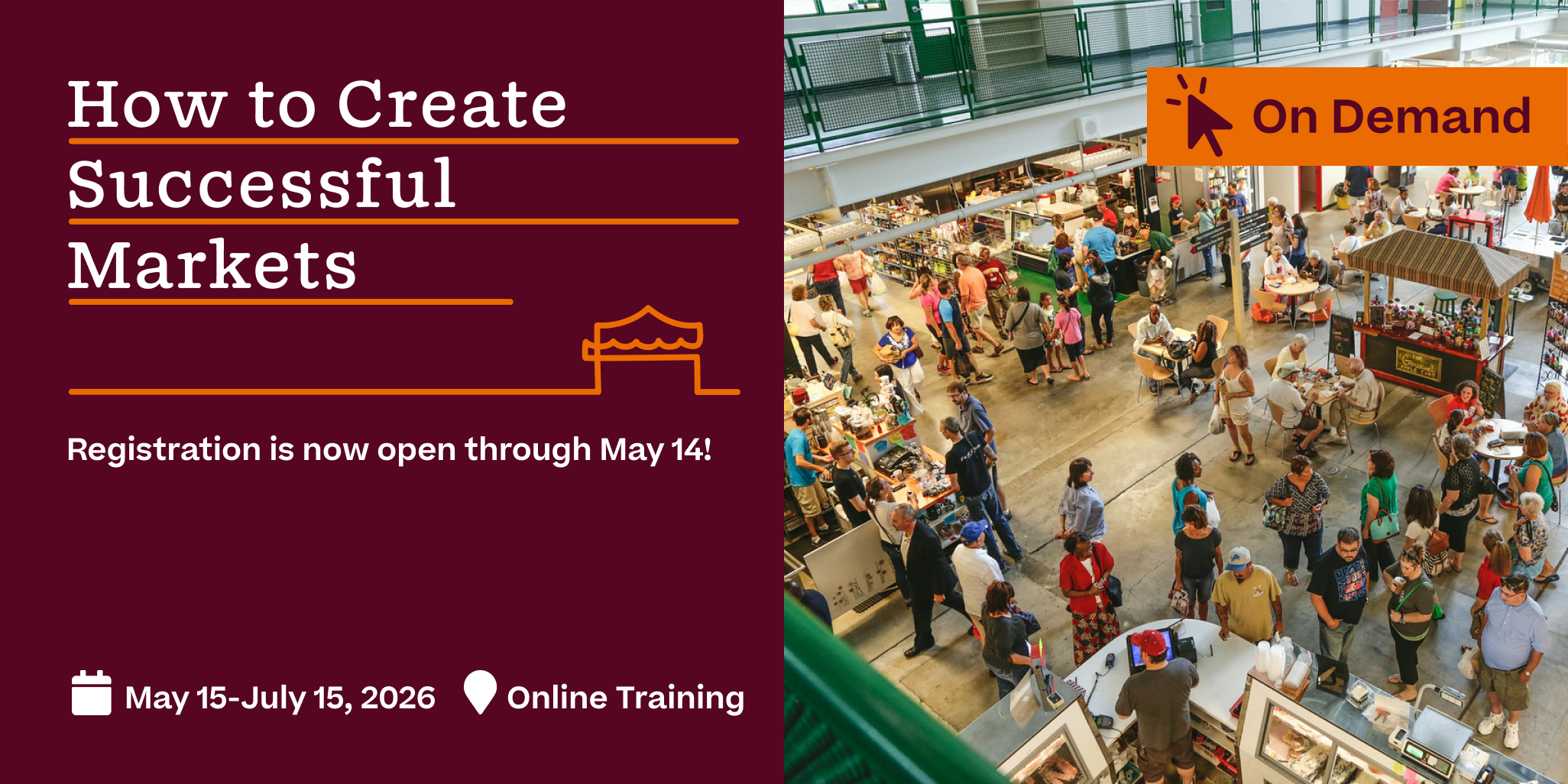
Creating vibrant, inclusive, and economically resilient public markets is no small task. For those looking to strengthen their knowledge or take the first steps toward launching or revitalizing a market, a new training opportunity offers valuable insights and practical guidance.
From May 15 to July 15, 2026, Project for Public Spaces will host an online, on-demand course titled “How to Create Successful Markets.” Registration is open until May 14, 2026, giving participants access to more than six hours of expert-led content, designed to be completed at their own pace.
A Practical Introduction to Public Markets
This foundational course is designed for a wide audience, including:
- New market managers, staff, and board members
- City officials and Main Street managers
- Developers and food advocates
- Anyone interested in launching or improving a public market
Drawing on the experience of the Market Cities Program and a global network of practitioners, the training explores what makes markets thrive, not only economically, but also as inclusive community spaces.
What Participants Will Learn
The course is structured around key themes essential to successful market development and management, including:
- The social and economic benefits of markets
- Core ingredients of successful markets
- Market management and operations
- Expanding opportunities for vendors
- Measuring impact and value
- Strengthening markets as public spaces
- Fundraising and long-term sustainability
Through a mix of recorded presentations, global market case studies, and guided activities, participants will gain both theoretical understanding and practical tools.
Flexible Learning with Expert Support
The on-demand format allows participants to engage with the material on their own schedule. In addition to the course modules, attendees will also have access to two live “office hour” sessions, an opportunity to connect with peers and discuss questions directly with course leaders.
The training features contributions from a diverse group of international experts working across public space, economic development, and market management.
Who Should Consider This Training?
This course is particularly relevant for those at the early stages of market development or seeking to strengthen foundational knowledge. Those looking for more advanced or operational support may also explore additional offerings within the Market Cities Program, including technical assistance and networking opportunities.
Registration Details
- Course access: May 15 – July 15, 2026
- Registration deadline: May 14, 2026
- Format: Online, on-demand
As part of our ongoing collaboration with Project for Public Spaces, we are pleased to share this opportunity with our network. While we are not directly involved in the delivery of the course, we recognize the value of initiatives that support the development of strong, community-centered markets worldwide.
If you are working with, or aspiring to create, public markets, this training could be a useful step in your journey.
Photo credit: FUNchitecture.
Previous articles
Recent Posts
FMCOUNT! 2026 is here: Let’s count biodiversity at farmers ma...