By Dennis Andaye – Nairobi Farmers Market
First, the drought stripped the soil, then the recent floods swept it away. What Kenyan farmers are experiencing is that the climate unpredictability is increasingly unreliable with far more deeper negative outcomes.
In Kenya, farming traditionally follows the flow of seasons. However, failing rains are creating a crisis for all farmers, and an even greater struggle for small family farms. In the past months, this has been what farmers have been going through. With the effects, produce dwindling, quality of produce not good, food prices going up. Some stopped attempting to farm and just waited for the rains. This transition of farmers from active production to a state of desperate waiting signals more than just a bad season; it marks a pivotal moment for Kenyan food security.
Recent seasons have shown how vulnerable Kenya’s largely rain-fed agriculture system is to climate shocks. When rains fail or arrive late, crops struggle to germinate, planting seasons are disrupted, and harvests decline. For smallholder farmers who produce much of the country’s food, this can mean losing both their main source of income and their household food supply.
Drought does not only reduce harvests; it also weakens local economies, increases food prices and deepens existing vulnerabilities. The reality is, for families already managing rising costs of living, even a single failed season can have lasting consequences.
What we have seen with each drought is that it erodes assets that would normally help households recover. And every year, food insecurity has been on the rise in many parts of the country. In arid and semi-arid counties, water sources are shrinking, pasture is deteriorating, and livestock are becoming weaker due to lack of forage, some dying. And when livestock decline, families lose both income and a key source of nutrition, particularly milk for children. Crop farmers are also feeling the impact.
After the recent driest short-rain seasons, farming communities were just beginning to recover when heavy rains arrived, bringing floods, wreaking havoc across the country.
The abrupt shift from drought to flooding illustrates the delicate balance that Kenyan farmers face. Crops already weakened by water stress are being washed away, while overflowing rivers and landslides are destroying homes, roads, and markets. Counties like Nairobi, Kitui, Tana River, Kilifi, and West Pokot are among the hardest hit, with thousands displaced and scores of families losing livestock and stored food supplies.
When the floods arrived, they compounded these challenges rather than relieving them. Fields that had survived the dry season are now waterlogged, with seedlings and mature crops rotting in saturated soil. Livestock are struggling as pastures are submerged or contaminated, and water-borne diseases are spreading rapidly among humans and animals alike.
The recent poor rainfall has exposed the many layers of crisis affecting communities and farmers. Families that had sold assets to survive the drought now face additional losses from flooding, deepening food insecurity and poverty.
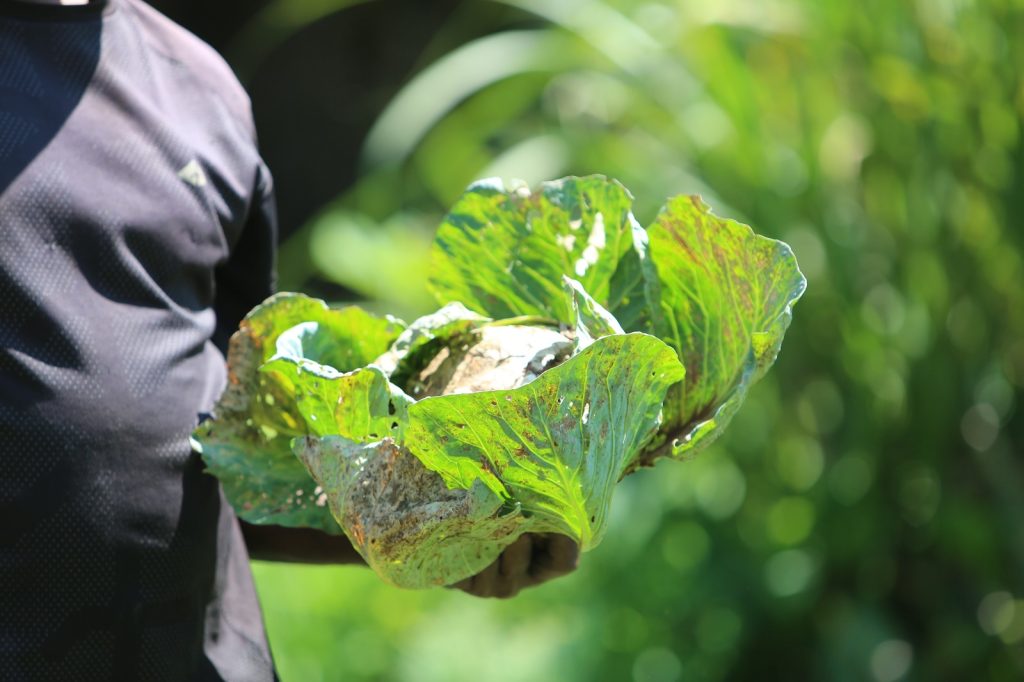
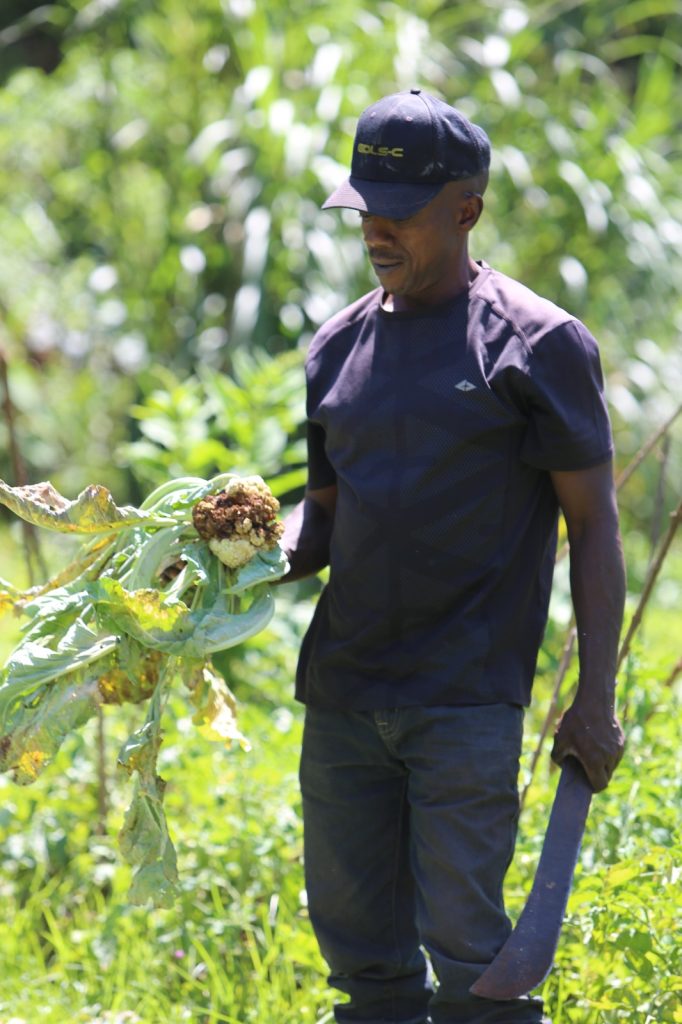
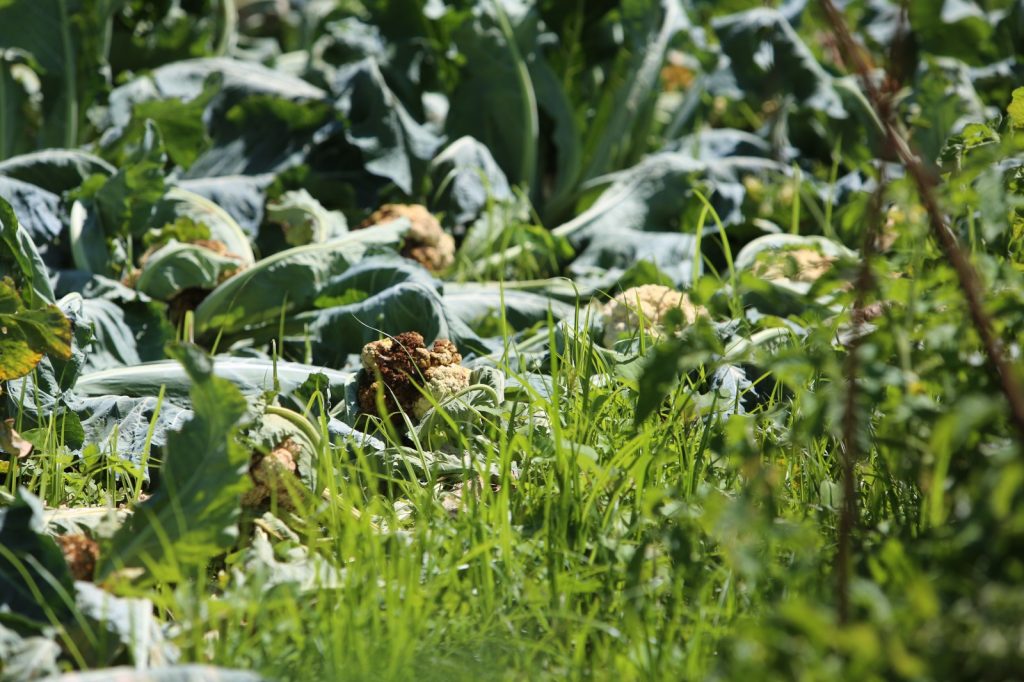
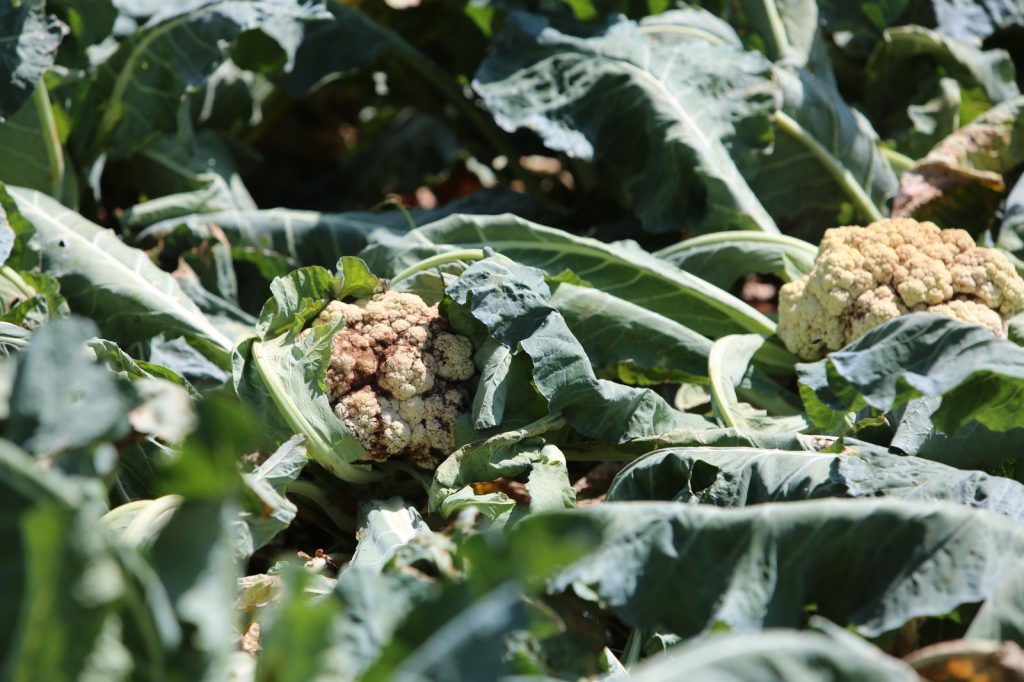
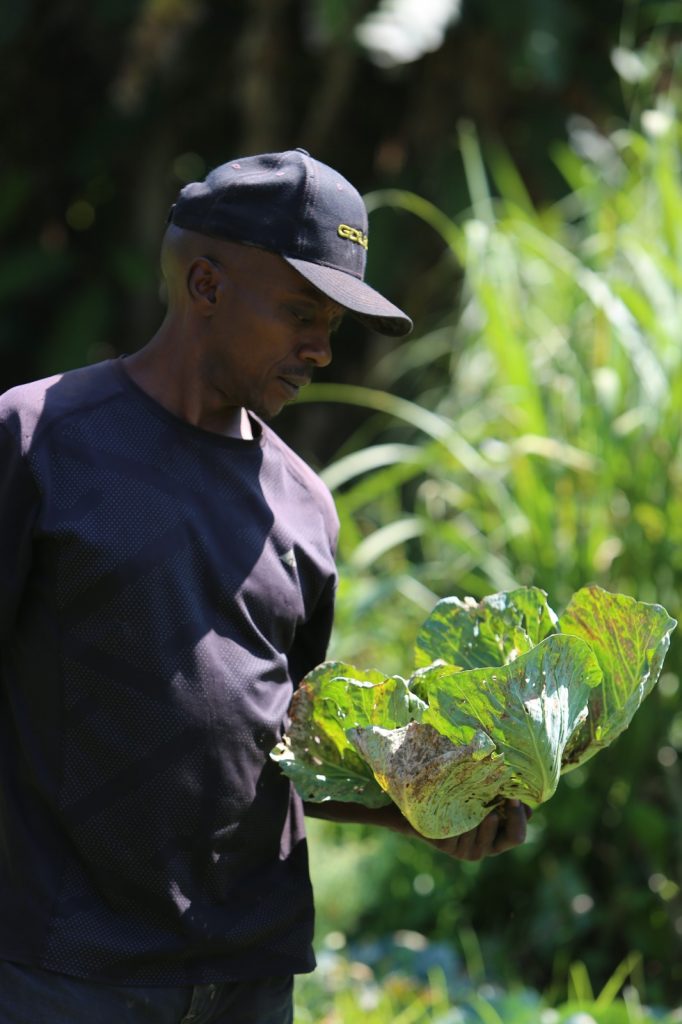
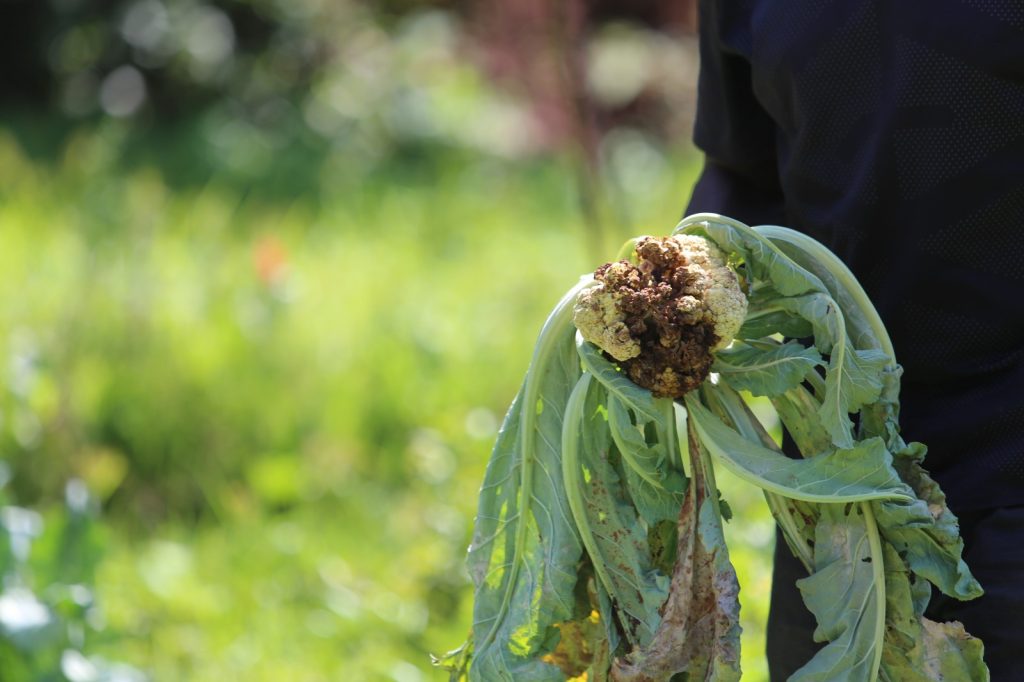
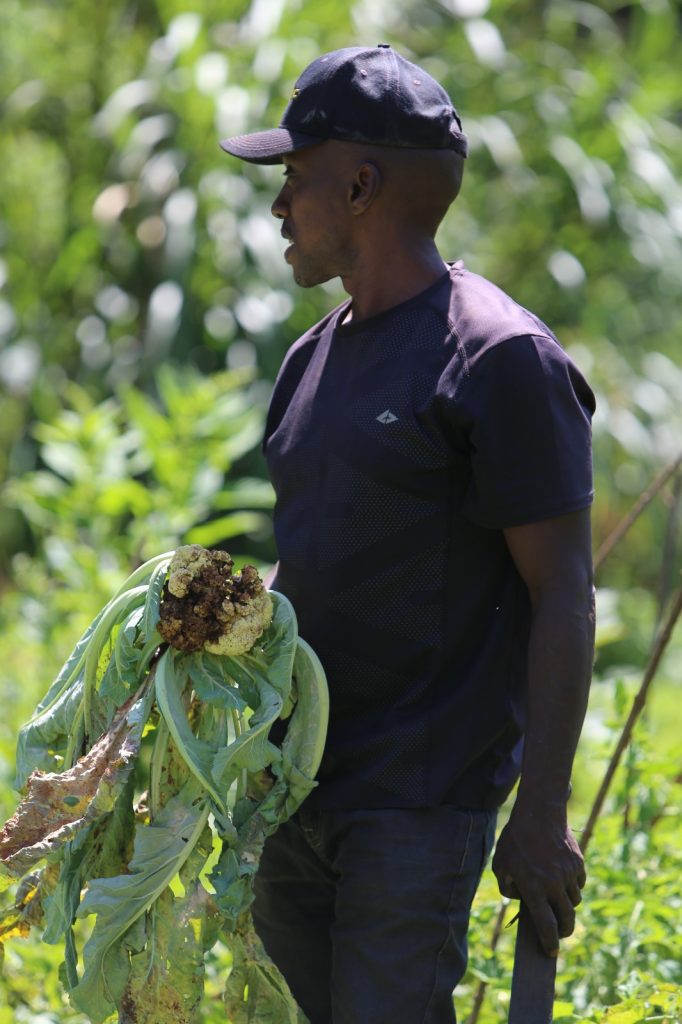
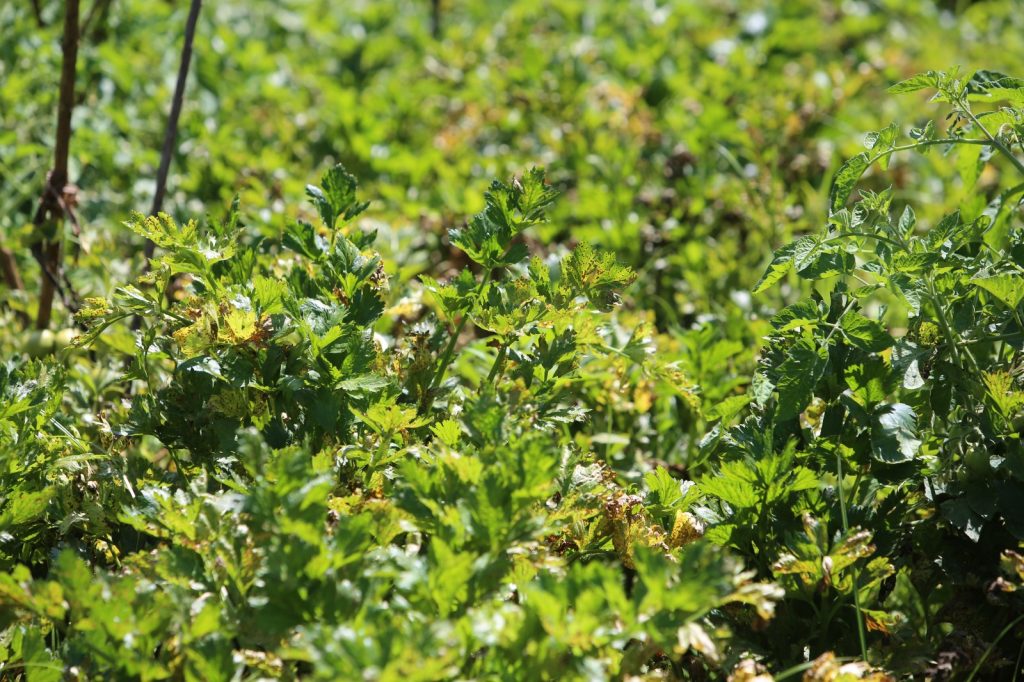
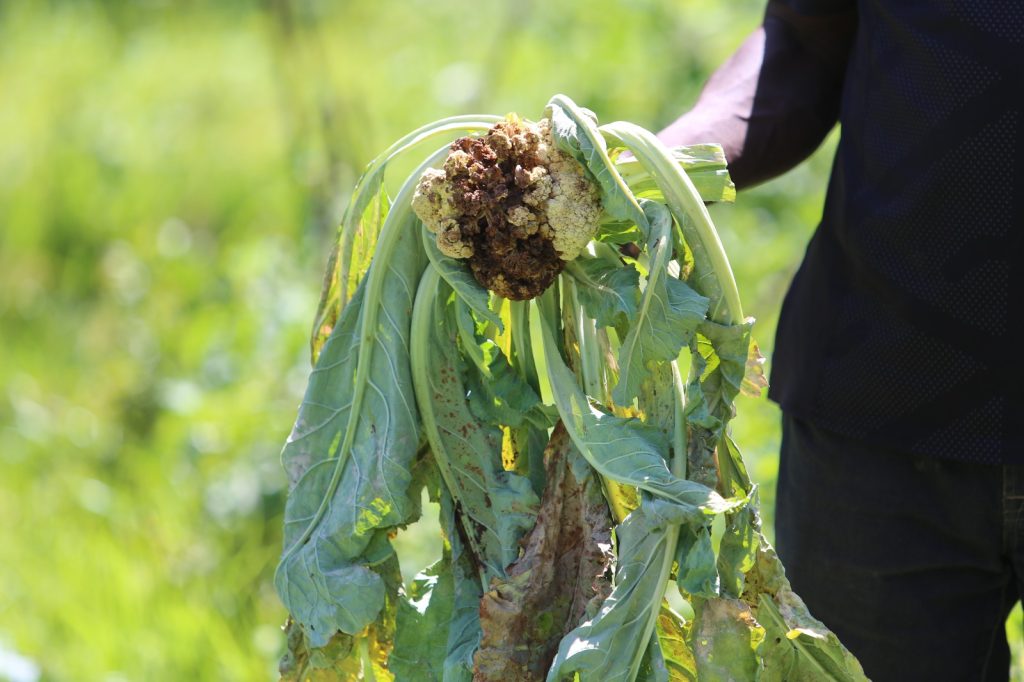
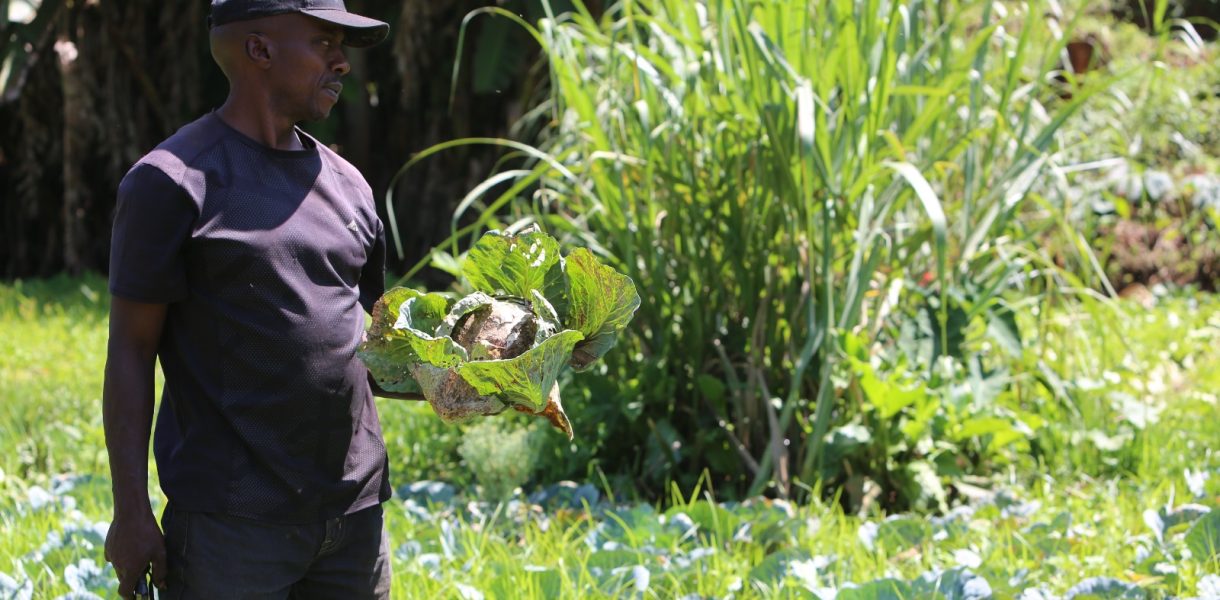
Humphrey Kamau is one such farmer whose farm was washed away from the floods. His farm was flourishing with strawberries, broccoli, cauliflower, cabbages, celery and tomatoes. All now gone with insignificant produce to salvage. For a smallholder farmer like Kamau and many others who depend entirely on the farm, it is painful and massive losses.
Kamau, a member of Regional Coalition for Farmers Market and a dedicated participant at the weekly Farmers Market Nairobi, has taken a break to start producing again. The market is eager to welcome him back to the market as soon as he’s got the harvest.