
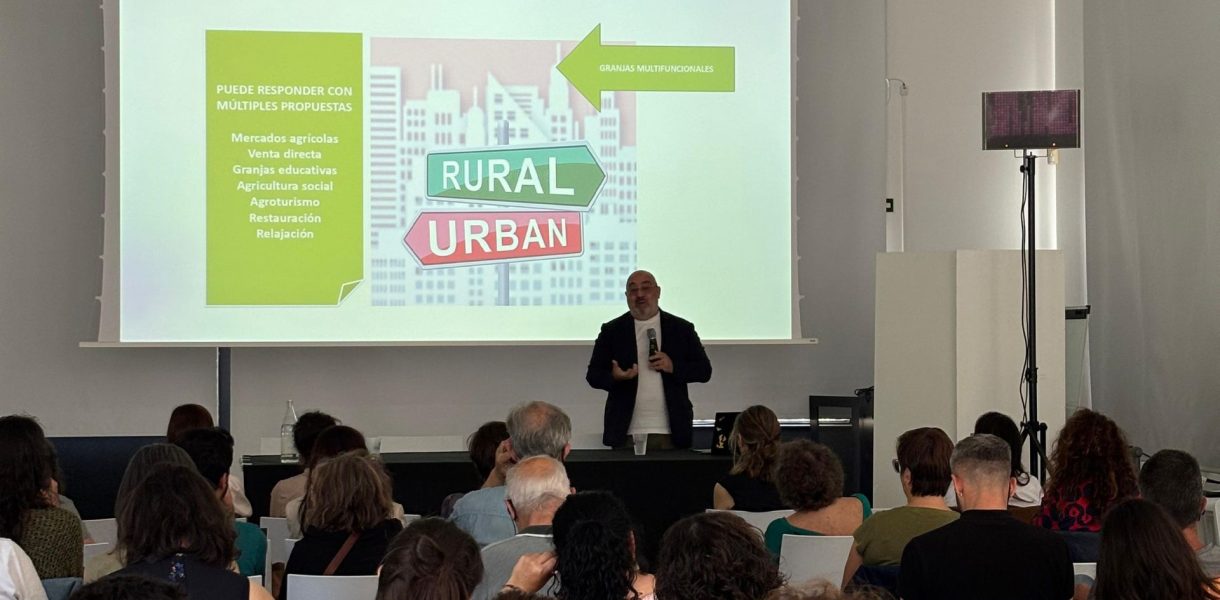
At the end of May, the World Farmers Markets Coalition traveled to Barcelona for an important mission focused on strengthening the future of farmers markets in Europe. Over the course of two days, we engaged in meaningful exchanges with local partners and participated in a key technical conference organized by the Oficina Conjunta de l’Alimentació Sostenible and the Region of Catalonia.
Day One: Exchange and Preparation with Xarxa and Slow Food Barcelona
Our first day was dedicated to an enriching session with our colleagues and members from Xarxa de Consum Solidari and Slow Food Barcelona. Hosted by the Xarxa team, the gathering provided space for dialogue and mutual learning. Carmelo Troccoli, our General Director, introduced the Campagna Amica model, a structured system that supports direct sales by farmers in Italy. Irene Facchetti (Campagna Amica Lombardy) and Viola Capriola (Grønt Marked, Denmark) shared insights from their respective local contexts, offering a broader European perspective. This day set the stage for the technical discussions to follow, fostering alignment and shared purpose.
Day Two: Advocating for Direct Sales at the Technical Conference
On the second day, we were honored to take part in the technical conference titled “Direct Sales at Farmers’ Markets: Uniqueness, Reference Models, and Key Relevant Aspects.” The event brought together institutions, practitioners, and stakeholders to examine the evolving landscape of local markets in Catalonia, particularly in light of the Region’s plans to revise legislation governing farmers markets.
The World Farmers Markets Coalition, alongside several of its members, was invited to present a spectrum of operational models from across Europe. The Italian experience, grounded in a national legal framework that facilitates farmer-to-consumer direct sales, served as a key reference point. Irene Facchetti and Carmelo Troccoli outlined how this framework supports small-scale agriculture, ensures traceability, and promotes sustainable local food systems.
A Shared Need for Legal Clarity
A central theme throughout the conference was the need for clear and supportive legislation to define and enable farmers markets. Establishing what a farmers market is and what it is not, is essential for protecting the interests of family farmers and the organizations that represent them. The Catalonian case, where regulation is currently under review, underscores how crucial it is for policies to reflect and support the social, economic, and environmental value of farmers markets.
Connecting with Local Markets and Allies
Beyond institutional discussions, we were especially pleased to connect with local markets such as Mercadillo Agricultor Tacoronte (Tenerife) andMercat de Pagès de Gavà, as well as to reconnect with our long-standing members Xarxa de consum solidari and Slow food Barcelona. Despite facing ongoing political and logistical hurdles, these actors continue to champion food sovereignty and direct farmer-consumer relationships in Catalonia.
Looking Ahead
We extend our sincere thanks to the Region of Catalonia and the Oficina Conjunta de l’Alimentació Sostenible for their generous hospitality and their commitment to advancing sustainable food systems. We hope the upcoming legislative reforms will empower farmers and market associations alike—facilitating easier access to public spaces, improving legal clarity, and ultimately supporting a thriving network of farmers markets across the region.
This mission reaffirmed our belief that international cooperation and knowledge exchange are vital to securing the future of farmers markets. Together, we can ensure that these vital spaces for local food, culture, and community continue to grow and flourish.