From June 12 to 14, 2025, Milwaukee, Wisconsin played host to the 12th International Public Markets Conference, the world’s leading gathering of public market professionals. Organized by Project for Public Spaces, the event welcomed more than 400 leaders, operators, advocates, and policymakers from across the globe to explore the powerful role of markets in building healthier, more resilient communities.
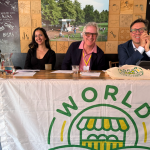
Among the highlights of the conference was a dynamic panel discussion held on Friday, June 13, titled “Make Some Noise! Scaling Up Policies from Farmers Market Outreach and Advocacy Around the World.” This session brought together global perspectives on how farmers markets are evolving as drivers of social, economic, and policy change.
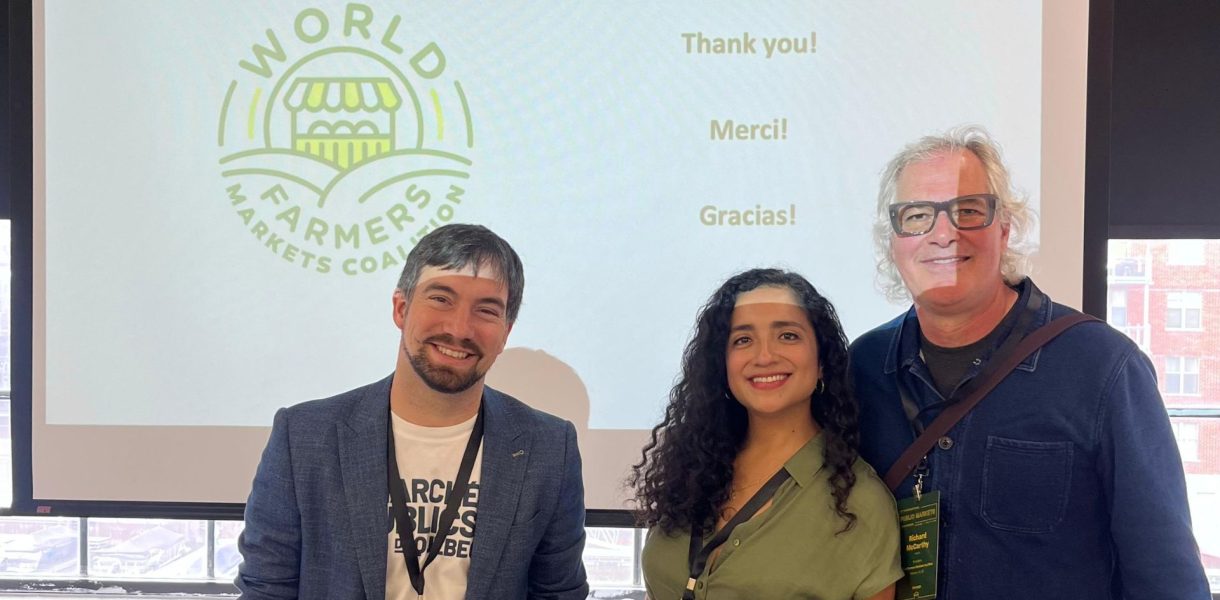
Richard McCarthy, President of the World Farmers Markets Coalition (WFMC), joined the panel alongside Ana María Huaita Alfaro, an international specialist in urban food markets based in Lima, Peru and Jean-Nick Trudel, Director of the Association des Marchés Publics du Québec (Québec, Canada)
Scaling Impact: From Local Action to National Policy
The panel focused on how farmers markets are not just spaces for local food exchange but are also platforms for community outreach, policy advocacy, and urban transformation. The speakers explored how market leaders are working to raise awareness about the distinctiveness of farmers markets, and how they’re advocating for their integration into broader food security strategies and urban sustainability agendas.
A key aim of the discussion was to explore how local market practices and outreach strategies can influence and scale up to inform citywide and national policies—ensuring the long-term sustainability of farmers markets and their contributions to inclusive local economies.
Diverse Voices, Shared Vision
Ana María opened the session by framing the shared values and challenges among farmers markets around the world, drawing on experiences from WFMC members. She shared insights from Agroferias Campesinas (Lima) and Mercado de la Tierra Slow Food (Bogotá), highlighting the realities of food commercialization and the ongoing fight for food security in South America. As a sweet bonus, she shared chocolates from Agroferias Campesinas with fellow participants.
Jean-Nick then presented the experience of Marchés Publics du Québec, offering a compelling look at how regional networks can support farmers markets through policy influence and strategic partnerships. His talk illustrated how the Québec network has built strong alliances across regional and national levels to strengthen the presence and impact of public markets in Canada.
Richard concluded by positioning these stories within a global framework, introducing the work and mission of the World Farmers Markets Coalition. He reflected on how the Coalition amplifies the voices of its members worldwide, and spotlighted recent collaborations in Africa under the MAMi project. His reflections highlighted the importance of shared learning, coordinated advocacy, and global-local solidarity in advancing the farmers market movement.
A Global Dialogue
The panel attracted a diverse audience, including WorldFMC members, market professionals from the US and the UK, and even colleagues from retail and wholesale markets underscoring the growing interest in cross-sectoral dialogue around local food systems.
At a time when public programs and regulatory frameworks often overlook or undervalue the role of farmers markets, the panel was a powerful reminder that these spaces are not only vital for food access, but are also agents of change advancing economic inclusion, food sovereignty, and sustainable urban development around the world.
Author: Ana María Huaita Alfaro