At the recent side event “Integrating Peru’s Megadiversity into Sustainable Food Systems: Scaling Up Successes from Food Processing and Other Food Actors,” the World Farmers Markets Coalition had the pleasure of participating in a high-level conversation dedicated to unlocking the potential of Peru’s extraordinary biodiversity. We were represented by Ana María Huaita Alfaro, who brought to the panel a grounded perspective on how local markets, small farmers, and territorial development intersect to build sustainable, resilient food systems.
Highlighting the Voices of Peru’s Local Markets
Ana María opened her contribution with a short video featuring stories collected through CoMercado, her personal project to promote local markets, capturing the daily realities, challenges, and strengths of local markets across Peru. The footage served as an anchor point for her intervention, reminding the audience that biodiversity is not only a scientific or environmental asset, but a lived, cultural, and economic one.
Small Farmers, Market Access, and Territorial Development
In her remarks, Ana María highlighted key elements shaping the Peruvian landscape for smallholder participation in local and regional markets:
- Market access gaps that prevent small farmers from fully benefiting from the country’s megadiversity.
- The importance of strengthening local economies and territorial value chains, ensuring that biodiversity-rich products can move from rural communities to domestic and international markets.
- The need for supportive economic and policy frameworks that enable farmers to thrive, innovate, and remain active stewards of agrobiodiversity.
Her message emphasized that integrating biodiversity into sustainable food systems hinges on empowering the people who cultivate, conserve, and commercialize these products daily.
A Panel of Leaders Across Sectors
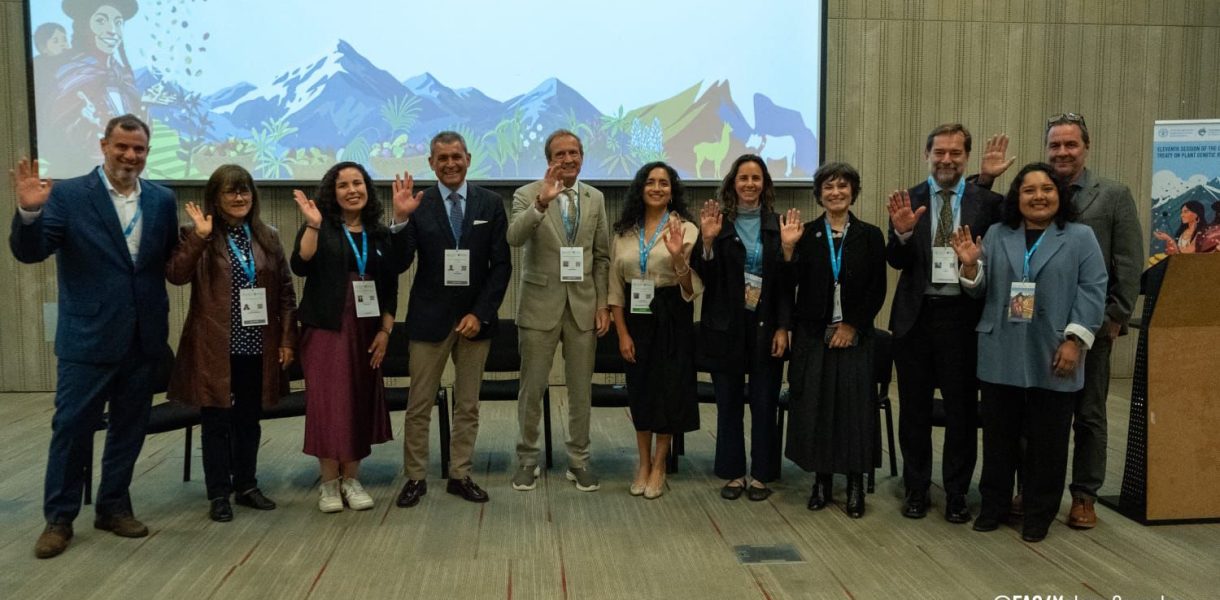
The side event gathered a diverse and influential group of participants from across the private sector and international cooperation. Joining the discussion were:
- FAO Peru representative, Ms. Mariana Escobar, and FAO Deputy Secretary of the International Treaty, Mr. Álvaro Toledo
- Mr. Rafael De Cordova Vascones, CEO at Tiyapuy Foods and Mr. Jorge Lopez-Doriga, Chief Communication & Sustainability Officer at AJE Group, leaders of Peruvian companies trading biodiversity-based value-added products nationally and internationally
- Ms. Malena Martinez, a prominent figure from gastronomy and food research, leading Mater Initiative and Central, recognized as the world’s best restaurant in 2023
- José Carlos Callegari Gazzo, Sustainability Manager at Banco de Crédito del Perú (BCP Perú), representative from Peru’s largest private bank
- Other representatives from the national tourism agency and international cooperation in Peru.
This intersection of agriculture, gastronomy, finance, tourism, and international development highlighted the breadth of actors who play a role in shaping the future of food systems rooted in biodiversity.
A Side Event with Global Relevance
The session organized under the theme of scaling up successes involving food processors, gene banks, NGOs, FAO, and agrobiodiversity-positive companies, aimed to:
- Showcase replicable regional models promoting biodiversity in food chains.
- Strengthen collaboration among the food processing industry, FAO, and the International Treaty on Plant Genetic Resources for Food and Agriculture.
- Identify bottlenecks and opportunities to build partnerships aligned with the Sustainable Development Goals.
- Engage treaty delegates, funding committee members, FAO Peru, industry stakeholders, BSF partners, and previous panelists.
In this context, our contribution brought forward the essential dimension of local markets as engines of biodiversity, economic inclusion, and sustainable territorial development.
Looking Ahead
Peru’s megadiversity stands as both a global treasure and a powerful driver of local livelihoods. Integrating this biodiversity into sustainable food systems requires voices from across the value chain, but above all, it requires centering the farmers and markets that keep these resources alive.
The World Farmers Markets Coalition reaffirmed its commitment to amplifying farmers’ perspectives, promoting inclusive market systems, and contributing to global dialogues that shape the future of food.