In recent years, there has been growing global interest in supporting sustainable local food systems, not only to ensure food security but to strengthen connections between farmers and communities. The World Farmers Markets Coalition (WFMC) was founded to promote this movement internationally by helping countries without established farmers’ markets to develop them. Through innovative projects and global cooperation, the WFMC aims to transform food systems, particularly in emerging economies. One of the coalition’s most ambitious efforts to date is the MAMI project, a joint initiative supported by CIHEAM Bari and Italy’s Ministry of Foreign Affairs, aimed at establishing farmers’ markets across Africa.
Why local farmers’ markets matter
In many regions, particularly in parts of Africa, organized local food systems have yet to be widely established. Countries like Egypt, for example, have historically lacked systems for structured, direct-to-consumer food distribution, meaning small-scale farmers have fewer opportunities to connect directly with consumers, and communities miss out on the benefits of locally produced food.
Local farmers’ markets can have a transformative impact on communities by promoting sustainable agricultural practices, encouraging entrepreneurship, and strengthening local economies. More than a place to buy produce, these markets serve as hubs for community engagement, knowledge-sharing, and capacity building. By developing farmers’ markets in regions where they are uncommon, the WFMC is creating new opportunities for both farmers and consumers, fostering healthier, more resilient food systems that bridge rural and urban areas.
The Alexandria Market: a milestone for Egypt and WFMC
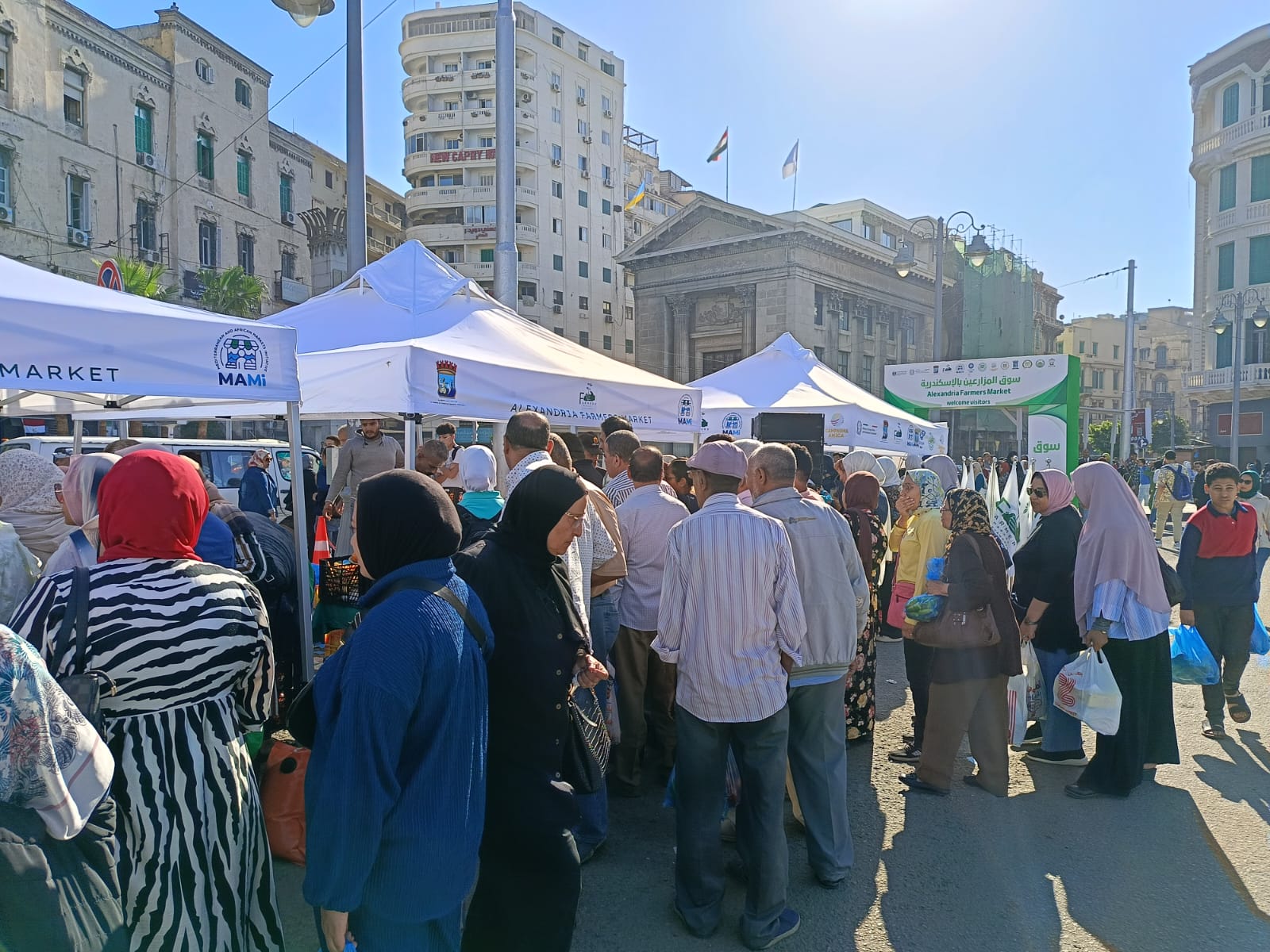
The opening of the first farmers’ market in Alexandria, Egypt, represents a significant milestone for the WFMC. This market is more than just a place to buy and sell food—it’s a proof of concept for WFMC’s vision and values. By bringing together farmers and consumers, the Alexandria market showcases what WFMC represents as an organization:
- Sharing best practices: the coalition connects local farmers with established market leaders, providing training in best practices that can help these markets thrive.
- Capacity building: WFMC invests in empowering farmers and market managers through hands-on training, which prepares them not only to run successful markets but to be advocates and leaders in the local food movement.
- Community building: these markets serve as gathering places that help strengthen the bonds between urban consumers and rural producers, fostering mutual respect and understanding.
- Establishing new leadership: WFMC also focuses on developing leaders who can champion these markets in their communities, ensuring they are sustainable and impactful. These new leaders include not only farmers’ market managers but also association leaders who are equipped to guide the future growth of local food systems.
The Alexandria market is a powerful example of WFMC’s broader goal: integrating local food distribution within the global food system. As the demand for sustainable, locally sourced food grows globally, WFMC is working to create a framework that enables small farmers to thrive alongside large-scale agricultural operations. The coalition recognizes that global food security depends on strong, resilient local systems that can complement and support each other.
Expanding across Egypt and beyond
The Alexandria farmers’ market is just the beginning. The Egyptian Minister of Supply, Sherif Farouk, has expressed hope that this pilot market will inspire similar initiatives across Egypt, eventually developing a network of local markets that can support farmers and provide fresh produce for communities throughout the country. By setting a successful precedent in Alexandria, WFMC aims to create a ripple effect, spreading sustainable local food practices far beyond one city.
The MAMI project’s next phase: a new market in Nairobi
Building on the early success in Egypt, the MAMI project is moving into a new phase. WFMC is already collaborating with RECOF, a WFMC member organization, to open a new farmers’ market in Nairobi, Kenya. This expansion into Kenya represents an exciting opportunity to replicate and adapt the model to different cultural and economic contexts across Africa, continuing to build a stronger, more interconnected global food network.
The work of the World Farmers Markets Coalition is paving the way for sustainable, resilient food systems in regions where they can make the greatest impact. Through the Alexandria market and the MAMI project, WFMC is building a blueprint that other regions can follow, proving that even the smallest initiatives can spark lasting change. As farmers’ markets continue to open in new regions, they bring with them not only fresh produce but also new relationships, leadership, and opportunities that help communities thrive.
We are building sustainable food systems where they’re needed most. Through projects like the Alexandria market, we show that small initiatives can inspire lasting change, fostering connections and opportunities for communities.
Previous articles
Recent Posts
FMCOUNT! 2026 is here: Let’s count biodiversity at farmers ma...