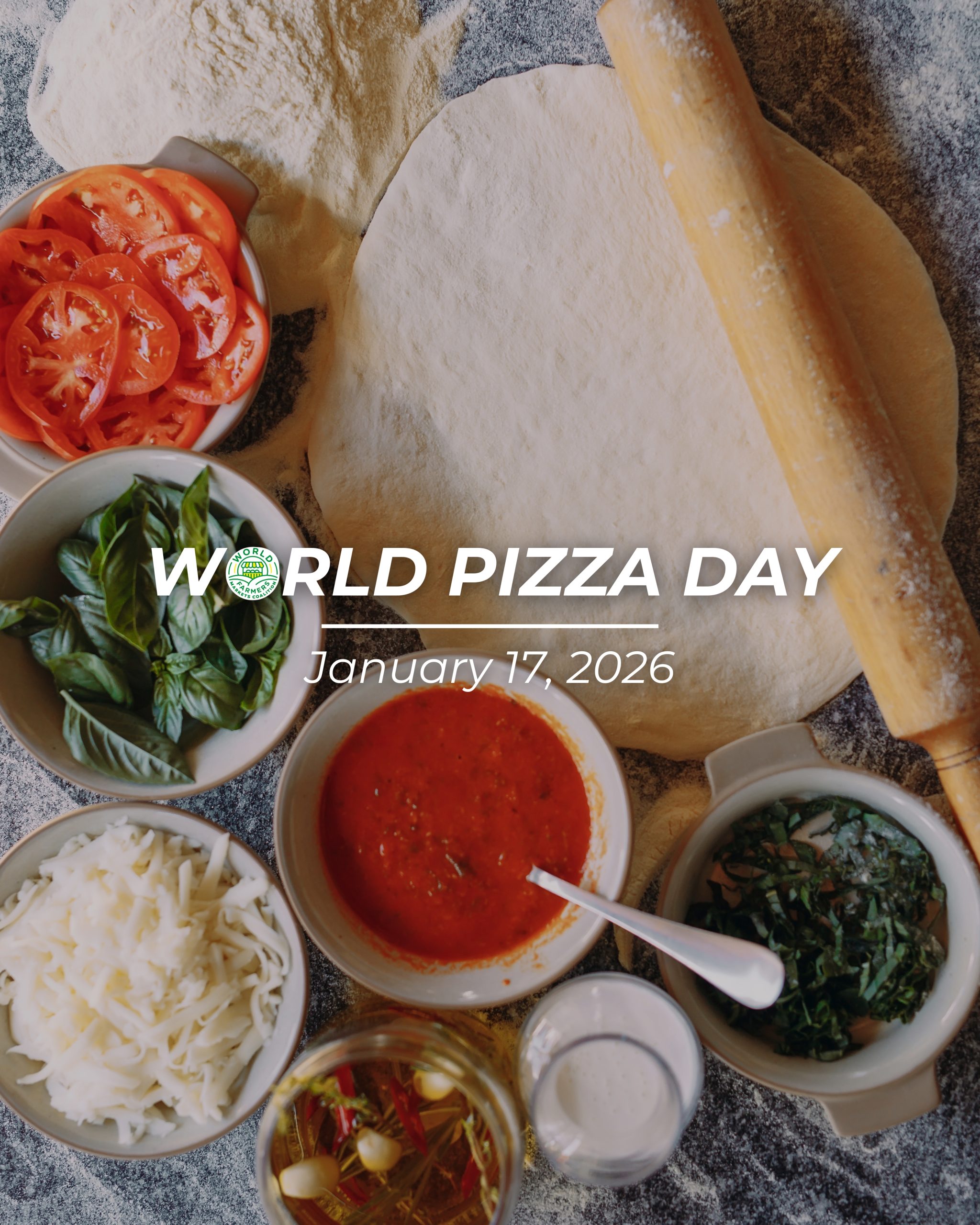
Pizza is one of the most beloved foods worldwide. Born in Italy, it has become a global culinary phenomenon, reinterpreted and enjoyed in every corner of the globe, bringing people together with a shared language of flavor, creativity, and conviviality.
January 17th, celebrated as World Pizza Day, symbolizes more than just a dish, it honors the craft of the pizzaiolo and the cultural and social value of pizza as a shared meal and cultural expression.
In 2017, UNESCO recognized the Traditional Art of the Neapolitan Pizzaiolo as Intangible Cultural Heritage of Humanity, highlighting pizza’s role in identity, creativity, and communal life.
Pizza by the Numbers: Global Reach and Economic Impact
Pizza is also a major global industry, with remarkable consumption and market trends:
- Global market value: Estimated at USD 155–160+ billion in 2024, making pizza one of the most economically significant food segments worldwide.
- Per capita consumption: United States about 13 kg/person/year, Norway around 11.4 kg/person/year, Italy around 7,8 kg/person/year with high consumption also in Switzerland, Sweden, France, Germany, Spain, and beyond.
From New York and São Paulo to Tokyo and London, pizza adapts to local tastes, ingredients, and culinary traditions, a global mosaic of flavors while still carrying its Italian roots.
From the Field to the Oven: Pizza and Local Food Systems
At its heart, pizza is an agricultural story. Every pizza begins in the fields, with grain, tomatoes, cheese, and olive oil and its quality depends on local ingredients and short, transparent supply chains.
Across the world, farmers, millers, cheesemakers, and pizzaioli are rediscovering the value of local food systems and direct selling, where ingredients move from producer to pizza oven without unnecessary intermediaries. This not only ensures freshness, flavor, and sustainability, but also strengthens rural economies, preserves biodiversity, and connects consumers with the people who grow their food.
Farmers markets, cooperatives, and local food initiatives are essential to this ecosystem. They create spaces where food is not anonymous, and where producers and consumers can reconnect through trust, knowledge, and shared values.
Looking Forward: Sustainability and Shared Tables
Beyond its economic footprint, pizza raises important discussions about ingredient quality, sustainable food systems, and fair labor practices, all part of shaping a future where heritage foods can thrive responsibly.
On World Pizza Day, we celebrate more than just a dish.
We celebrate a living global heritage that continues to evolve while bringing the world together, slice by slice, from local fields to the shared table.
Previous articles

Recent Posts

FMCOUNT! 2026 is here: Let’s count biodiversity at farmers ma...