In 2020, farmers markets were in free fall, fighting to operate amidst a global pandemic. Then-Campagna Amica Director General Carmelo Troccoli called out to the world of farmers market managers, farmers, and consumers in search of possible pathways back to open tents and open markets. By 2021, during the World Food Systems Summit preparatory meetings in Rome, a small group of pioneers assembled to demonstrate to the world — with masks, social spacing, creativity and verve — that farmers markets are returning to city centres, village greens, and roadsides as essential services. This assembly became the World Farmers Markets Coalition.
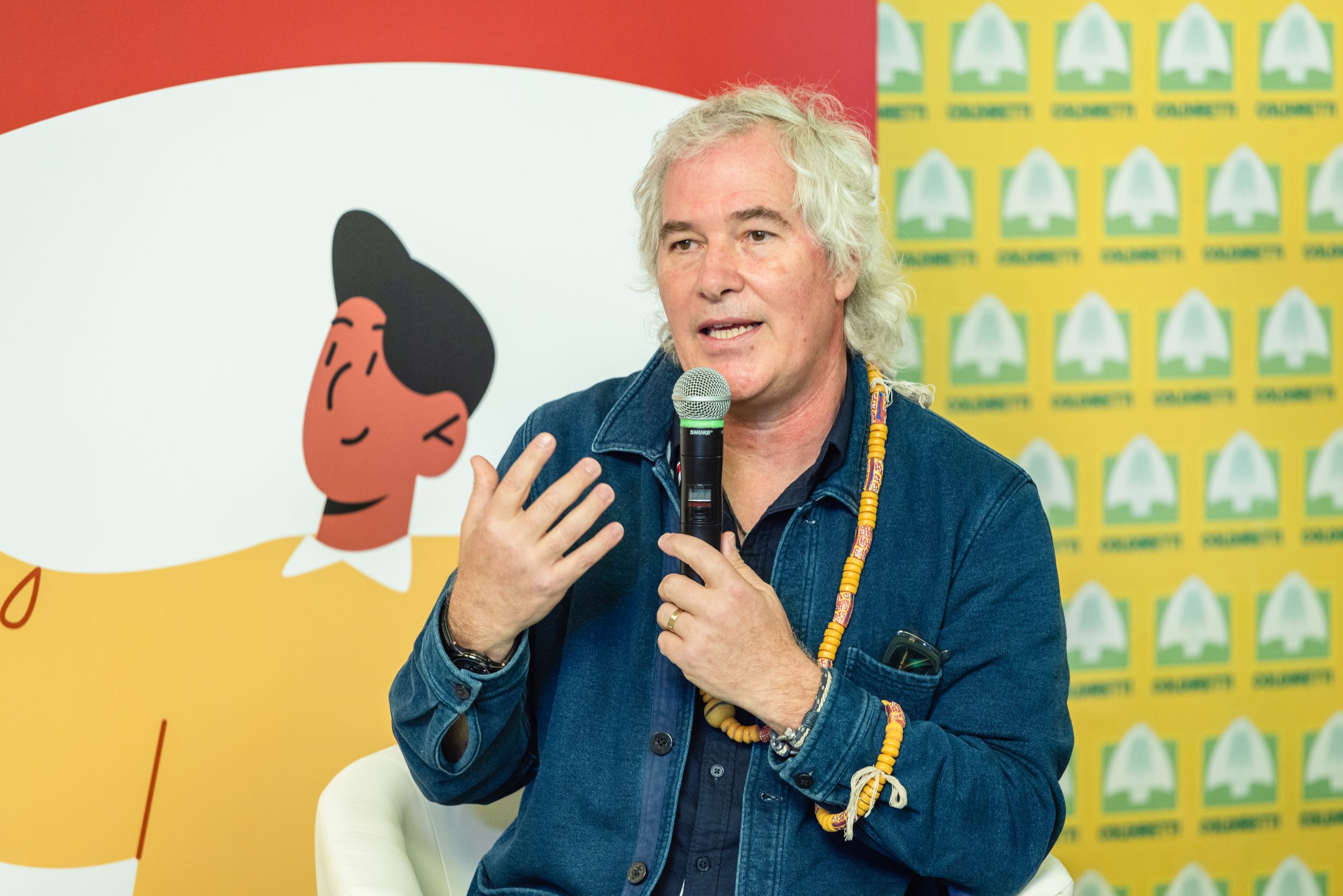
We are the World Farmers Markets Coalition. In five furious years, we leapt from a fledgling association incorporated by just a handful of market leaders and into a global voice for the dignity and creativity of local farmers, consumers, and communities to reclaim some control over local food production, distribution, and marketing. In 2023, my interim role as President became a global mandate at our first General Assembly in Rome. Looking back at the first GA, we were still under pressure to convey not only the novelty of our work, but also the essentiality of farmers physically assembling in city centres to conduct business, to animate public spaces with healthy and local food, and to remind decision makers that it is still possible to do things in light and imaginative ways to improve people’s everyday lives.
The spark that became a breakthrough was for the governments of Ghana, Italy, and the United States to recognise the farmers markets as resilient multistakeholder coalitions and ultimately gain the status as one of a very few number of UN Food and Agriculture Organisation (or FAO) Food Coalitions.
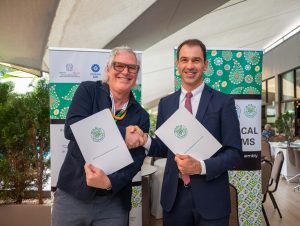
Since these early pioneering days, we have held two more General Assemblies in Rome, including in 2025 to kick off the FAO 80th Anniversary on its sacred grounds of international cooperation. We have grown in number — now numbering over 80 countries on our map, entered into international collaboration projects with agricultural learning centre, CIHEAM Bari, the Italian Ministry of Foreign Affairs and International Cooperation, the FAO to develop a global mapping tool and e-Learning course on farmers markets, the Italo-Latin American Institute (ILAA), and the UN International Fund for International Development (IFAD), and more. These enterprising initiatives enable us to share the knowledge of our network’s practitioners and grow capacity in Albania, Bolivia, Colombia, Republic of Congo, Croatia, Denmark, Ecuador, Egypt, Ghana, Italy, Ivory Coast, Kenya, Lebanon, Mozambique, Netherlands, Peru, Poland, Senegal, Spain,Tanzania, Tunisia, and Uganda.
While the map representing active and recent projects is surprising for such a young organisation, it is also fair to say that it is not enough. The promise to cultivate local food strategies and local food systems should be felt everywhere around the world. However, this takes painstakingly patient steps to gain trust with local authorities, international organisations, and local food leaders on the ground to embrace that which we see: The launch of local public direct marketing institutions to make real – every week – provides not only a glimpse of how we redesign our local lives around local food, but the pathway forward.
It is through this daily, iterative action that grows precisely what we are focusing on for the 2026 General Assembly: Growing Local Food Systems. Rather than birthed in libraries and policy briefs, the future pathways to grow local food systems are cultivated on the ground, inside the markets — where cooperation is balanced with competition — through trial and error, through small steps to reimagine the social contract between supply and demand. Ours is a practitioners’ pathway to a future that is flourishing with healthy economies, healthy ecosystems, and healthy communities.
We attend many international meetings. We sit down to meet with agricultural ministers and municipal authorities. Our team can attest just how challenging it is for decision makers to take the intellectual leap from tents and umbrellas on one hand to the wholesale redesign of local food systems on the other. One seems to be ad hoc and fanciful, whereas the other seems to require insights from think tanks and accredited institutions of learning.
Does this sound familiar to you? Do you struggle to be taken seriously? I write to share with you that the world is changing. We are making some headway on this front, made somewhat easier by the drop in confidence in the global food order. Shortages, skyrocketing prices, food illness outbreaks, and unstable systems only point to the durability of our work: to regain trust and control at the local level.
For these reasons, I thank you for your support for the World Farmers Markets Coalition, welcome you to join us in our journey to revive local, and to pay tribute to the unsung heroes who make the concept of local foods a reality each and every week around the world: farmers, farmers market managers, consumers, and other protagonists who animate the public spaces the bear fruit.
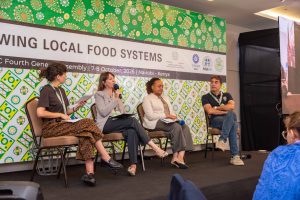
We will convene in Nairobi, Kenya 7-8 October to close a chapter to the current governing body for our global association, elect new leaders, make new commitments to each other to promote the farmers market strategy, deliver useful and interactive services to our members, and to cultivate a community of practice from Australia to Zambia, from town to country, and from seed to fruition!
Previous articles
Recent Posts
From projects to impact: what national experiences are teachi...